
Euphorbia Hirta (Asthma Plant): Traditional Uses, Benefits & Safe Home Preparation
Euphorbia hirta—often called Asthma Plant—is a small medicinal herb widely used in traditional systems of medicine across Asia, Africa, and the Caribbean. Recognized by its oval green leaves and clustered fuzzy flower heads, this plant has long been valued for its role in supporting digestive health, respiratory comfort, oral hygiene, and internal cleansing when used correctly.
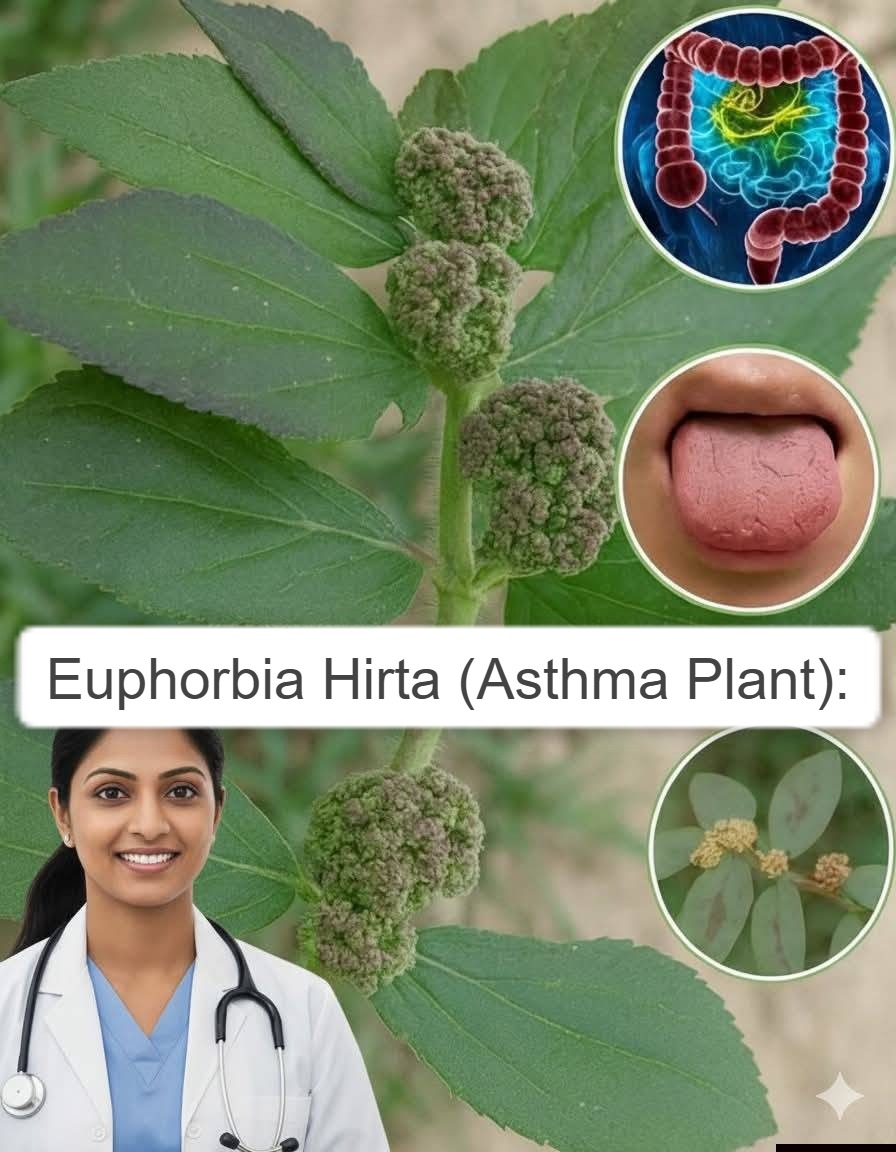
The image highlights the plant itself along with common areas it is traditionally associated with, including the digestive tract and oral health, reflecting its historical use in herbal wellness practices.
Key Traditional Benefits (Folk & Herbal Use)
These benefits are based on traditional use and general herbal knowledge, not medical claims or cures.
Digestive Support
Traditionally used to help calm mild diarrhea
May support gut balance and digestion
Used in folk remedies for intestinal discomfort
Respiratory Comfort
Commonly brewed as tea for coughs and chest congestion
Used in traditional asthma-support remedies (not a replacement for inhalers or medical care)
Oral & Tongue Health
Sometimes used as a mild herbal rinse
Traditionally believed to help with tongue coating and mouth freshness
Antioxidant & Cleansing Support
Contains plant compounds associated with antioxidant activity
Used traditionally to support the body’s natural cleansing processes
Traditional Euphorbia Hirta Herbal Tea Recipe
Ingredients
1 teaspoon dried Euphorbia hirta leaves
(or 5–7 fresh, well-washed leaves)
1½ cups water
Instructions
Bring the water to a gentle boil.
Add the leaves and reduce to low heat.
Simmer for 5–7 minutes.
Turn off heat and let steep for another 5 minutes.
Strain and allow to cool slightly.
Drink warm.
How to Use
Consume once daily
Use for no more than 5–7 days
Best taken after meals
Helpful Tips
Always correctly identify the plant before use
Start with a small amount to test tolerance
Use fresh preparations—do not store for long periods
Can be combined with ginger for taste (if tolerated)
Important Precautions
Not for pregnant or breastfeeding women
Avoid long-term or excessive use
Not suitable for children without professional guidance
Do not use if you have known plant allergies
People with chronic conditions or on medication should consult a healthcare professional
Final Thoughts
Euphorbia hirta has a long history in traditional herbal practices, particularly for digestive and respiratory support. When used carefully, moderately, and respectfully, it can be a valuable part of a natural wellness routine. However, it should never replace medical treatment, especially for asthma, digestive disorders, or infections.