Homemade Pickled Vegetables
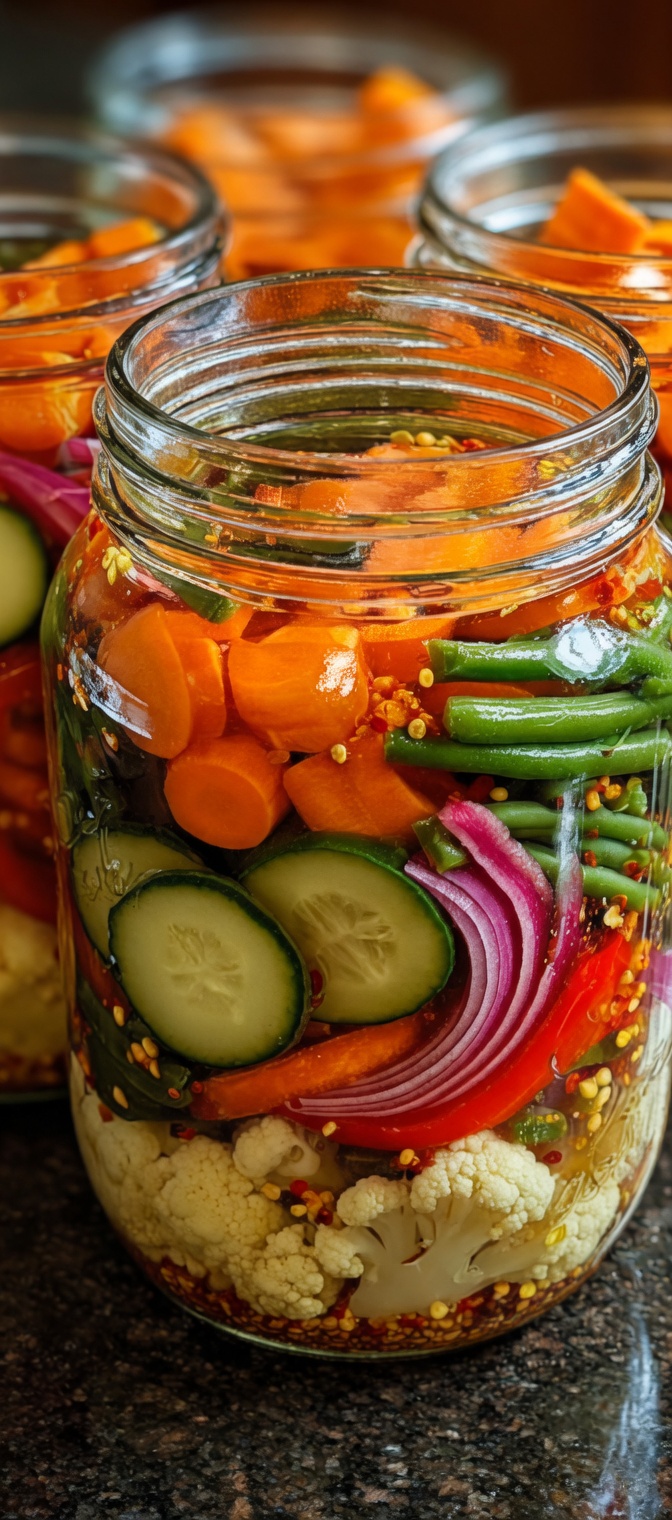
Homemade Pickled Vegetables are a crisp, tangy, and refreshing way to preserve fresh produce while adding bold flavor to your meals. This simple pickling recipe transforms everyday vegetables into a zesty, crunchy side dish that pairs perfectly with sandwiches, grilled meats, rice bowls, or salads. The balance of vinegar, salt, a touch of sweetness, and aromatic spices creates a bright and addictive flavor that improves as it sits. It’s easy, customizable, and perfect for meal prep or snacking straight from the jar.
Prep Time: 20–25 minutes
Pickling Time: 24–48 hours (recommended for best flavor)
Total Time: 1–2 days (including resting)
Ingredients
Vegetables
Cauliflower: 2 cups bite-sized florets
Carrots: 1 cup sliced into rounds or sticks
Cucumbers: 1 cup sliced into rounds or matchsticks
Green Beans: 1 cup trimmed and halved
Red Bell Pepper: 1 medium, sliced into strips
Red Onion: 1 small, thinly sliced into rings
Pickling Brine
Distilled White Vinegar: 2 cups
Water: 2 cups
Kosher or Pickling Salt: 2 tablespoons
Granulated Sugar: 1 tablespoon
Aromatics & Spices
Garlic: 3 cloves, peeled and smashed or minced
Mustard Seeds: 2 teaspoons
Black Peppercorns: 1 teaspoon whole
Red Pepper Flakes: ½ teaspoon (optional)
Bay Leaves: 1–2 dried leaves (optional)
Instructions
Start by thoroughly washing and cutting all vegetables into uniform sizes. This helps them pickle evenly and ensures a consistent crunch.
If you prefer slightly softer vegetables, you can blanch harder ones like cauliflower, carrots, and green beans in boiling water for 1–2 minutes, then immediately transfer them to ice water. This step is optional but helps balance texture.
Prepare clean, sterilized glass jars for storing the pickles.
In a medium saucepan, combine vinegar, water, salt, and sugar. Bring the mixture to a gentle boil, stirring until the salt and sugar fully dissolve.
Once dissolved, remove the brine from heat and let it cool slightly for a few minutes.
Place the prepared vegetables evenly into jars. Add garlic, mustard seeds, black peppercorns, bay leaves, and red pepper flakes between layers for even flavor distribution.
Carefully pour the warm brine over the vegetables, ensuring they are fully submerged. Tap the jars gently to release any air bubbles.
Seal the jars with lids and let them cool at room temperature for about 1 hour.
Once cooled, refrigerate the jars. Allow the vegetables to pickle for at least 24 hours before eating, though 48 hours gives the best flavor development.
Tips
Use fresh, firm vegetables for the best crunch and texture.
Cut vegetables evenly so they pickle at the same rate.
Always use clean, sterilized jars to prevent spoilage.
Let the brine cool slightly before pouring to maintain vegetable crispness.
Press vegetables down gently to ensure they stay submerged in liquid.
For extra crunch, avoid over-blanching or skip blanching entirely.
Shake the jar lightly after sealing to distribute spices evenly.
Taste after 24 hours and adjust seasoning in future batches if needed.
Store in the fridge at all times once opened.
Use glass jars instead of plastic to avoid flavor absorption.
Variations
Add sliced jalapeños for a spicy pickled version.
Use apple cider vinegar instead of white vinegar for a milder, fruity taste.
Add fresh dill for a classic pickle flavor profile.
Include radishes or turnips for extra crunch and sharpness.
Add turmeric for a golden color and earthy flavor.
Use honey instead of sugar for a natural sweetness.
Add coriander seeds for a citrusy, aromatic twist.
Mix in cabbage for a quick sauerkraut-style variation.
Add ginger slices for a warm, slightly spicy note.
Make it Mediterranean-style with oregano and olives.
Q&A
How long do homemade pickles last?
They last up to 2–3 weeks in the refrigerator when stored properly.
Do I need to boil the vegetables?
No, but blanching firmer vegetables helps soften them slightly.
Can I reuse the brine?
It’s not recommended for safety and flavor consistency.
Why are my pickles soft?
Over-blanching or using overripe vegetables can cause softness.
Can I make them less salty?
Yes, reduce salt slightly, but avoid removing it completely.
Can I use different vegetables?
Yes, almost any firm vegetable can be pickled.
Do I have to refrigerate them?
Yes, these are quick pickles and must be stored in the fridge.
Can I make them spicy?
Yes, increase red pepper flakes or add fresh chilies.
Why is my brine cloudy?
This is normal due to spices and minerals from salt.
Can I eat them immediately?
You can, but flavor improves significantly after 24–48 hours.
Nutrition
(Approximate per serving)
Calories: 20–40
Carbohydrates: 4–8g
Protein: 1g
Fat: 0g
Fiber: 1–2g
Sodium: Varies based on salt content
These pickled vegetables are low in calories, fat-free, and rich in fiber, making them a light and healthy addition to meals.
Conclusion
Homemade Pickled Vegetables are an easy, flavorful way to preserve fresh produce and elevate everyday meals. With their tangy brine, crisp texture, and customizable spices, they bring brightness and crunch to any plate. Whether you enjoy them as a snack, side dish, or sandwich topping, this recipe is simple, versatile, and endlessly adaptable to your taste.