
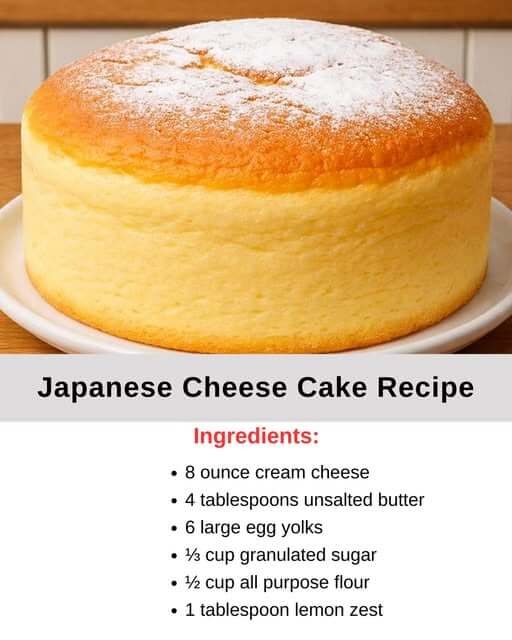
Japanese Cheesecake
Japanese Cheesecake, also known as “Cotton Cheesecake” or “Soufflé Cheesecake,” is a light, airy dessert that melts in your mouth. Unlike traditional dense cheesecakes, this version combines whipped egg whites with a creamy cream cheese base, resulting in a soft, cloud-like texture. It has a subtle sweetness and a delicate tang from cream cheese and lemon zest, making it perfect for an elegant dessert, afternoon tea, or a special occasion. This recipe is approachable for home bakers and produces a beautiful, puffed cheesecake that stays soft and tender without being overly rich.
Prep Time: 25 minutes
Cook Time: 50–60 minutes
Cooling Time: 30 minutes
Total Time: About 1 hour 45 minutes
Servings: 6–8 slices
Ingredients
Cream cheese: 8 ounces, softened
Unsalted butter: 4 tablespoons, softened
Large egg yolks: 6
Granulated sugar: 1/3 cup
All-purpose flour: 1/2 cup
Lemon zest: 1 tablespoon
Optional for meringue:
Large egg whites: 6
Cream of tartar: 1/4 teaspoon
Additional 2 tablespoons sugar for egg whites
Instructions
Preheat Oven: Preheat oven to 320°F (160°C). Line the bottom and sides of a 7–8 inch round cake pan with parchment paper. Wrap the outside with aluminum foil to prevent water from leaking during the water bath.
Prepare Cream Cheese Mixture: In a heatproof bowl over simmering water, melt cream cheese and butter together until smooth. Remove from heat and let cool slightly.
Mix Egg Yolks and Lemon Zest: In a separate bowl, whisk egg yolks with granulated sugar and lemon zest until slightly pale and thick.
Combine Cream Cheese and Yolks: Gradually fold the cream cheese mixture into the egg yolks until fully incorporated and smooth.
Add Flour: Sift the flour over the mixture and fold gently until just combined, being careful not to overmix.
Prepare Meringue: In a clean, dry bowl, beat egg whites with cream of tartar until foamy. Gradually add 2 tablespoons sugar and continue beating until stiff peaks form.
Fold Meringue into Batter: Gently fold one-third of the meringue into the cream cheese mixture to lighten it. Then fold in the remaining meringue in two additions, carefully maintaining airiness.
Prepare Water Bath: Pour batter into prepared cake pan. Place pan into a larger baking dish and fill the outer dish with hot water until it reaches halfway up the side of the cake pan.
Bake Cheesecake: Bake for 50–60 minutes, or until the top is golden and a skewer inserted into the center comes out clean. Turn off the oven, open slightly, and let cake cool in the oven for 15 minutes to prevent collapsing.
Cool and Serve: Remove from water bath, let cool to room temperature, then refrigerate for at least 1 hour before slicing. Dust with powdered sugar if desired before serving.
Tips
Use room-temperature cream cheese and butter to prevent lumps.
Sift flour to avoid clumps in the batter.
Be gentle folding meringue to maintain the light, airy texture.
Wrap the pan with foil to prevent water from seeping in during the water bath.
Avoid opening the oven door during the first 40 minutes of baking.
Beat egg whites until stiff peaks form but don’t overbeat or they may collapse.
Use fresh lemon zest for the brightest flavor.
Let the cake cool gradually in the oven to prevent shrinking.
Serve chilled or at room temperature for the best texture.
Store leftovers in the refrigerator covered for up to 3 days.
Variations
Matcha Japanese Cheesecake: Add 1–2 teaspoons of matcha powder to the batter.
Chocolate Cheesecake: Fold in 1/4 cup melted chocolate into the cream cheese mixture.
Citrus Twist: Add orange or lime zest in addition to lemon zest.
Berry Layer: Swirl in a spoonful of raspberry or blueberry puree before folding in meringue.
Coffee Flavor: Add 1 teaspoon instant coffee powder to the cream cheese mixture.
Mini Cheesecakes: Use muffin tins for single-serving versions.
Almond Flavor: Add 1/2 teaspoon almond extract for a nutty aroma.
Caramel Drizzle: Serve with a thin caramel sauce on top.
Vegan Version: Use vegan cream cheese, plant-based butter, and aquafaba for meringue.
Fluffy Layered Cake: Bake two thinner cakes and stack with whipped cream or fruit layers.
Q&A
Why is my cheesecake dense instead of fluffy?
Likely because the meringue was overmixed or deflated. Fold gently.
Can I bake without a water bath?
Water bath prevents cracking and gives a tender texture, so it’s recommended.
Can I use a different pan size?
Yes, but adjust baking time accordingly. Smaller pans will bake faster.
Why did my cake shrink after baking?
Cooling too quickly or overbaking can cause shrinkage. Cool gradually in the oven.
Can I make this gluten-free?
Yes, use gluten-free all-purpose flour.
How long does it keep?
2–3 days in the refrigerator, covered.
Can I freeze this cake?
Yes, wrap tightly and freeze for up to 1 month. Thaw in the fridge.
Do I need to separate eggs?
Yes, the meringue is essential for the light texture.
Is it okay if the top cracks slightly?
Slight cracks are normal; the texture will still be soft and fluffy.
Can I dust with powdered sugar?
Yes, just before serving for an elegant finish.
Nutrition
(Approximate per slice)
Calories: 250–300
Protein: 6–8 g
Fat: 15–18 g
Carbohydrates: 20–25 g
Sugar: 15–18 g
Calcium: Moderate from cream cheese
Vitamins: Small amounts from lemon zest and eggs
Conclusion
Japanese Cheesecake is a light, fluffy, and subtly tangy dessert that elevates any occasion with its delicate texture and elegant presentation. Its combination of a creamy cream cheese base and aerated egg whites results in a soufflé-like consistency that melts in your mouth. Whether served at a tea party, dinner, or as a special treat at home, this dessert impresses with both flavor and texture. With variations ranging from matcha to berry swirls, it is versatile enough to suit different tastes while remaining true to its signature lightness. Perfectly chilled, this cheesecake is a dessert that delights both the eyes and the palate.