
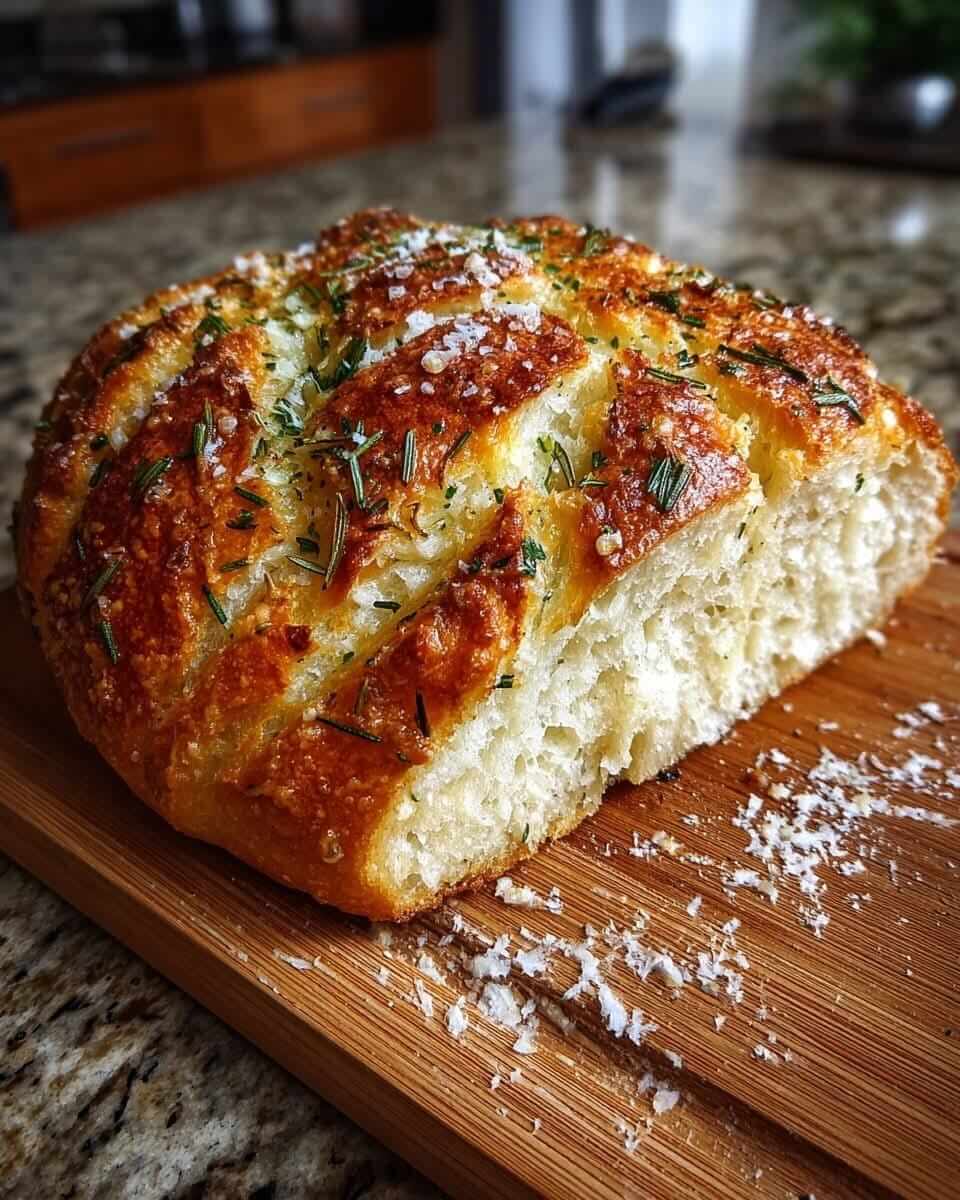
Mediterranean Rustic No-Knead Rosemary Garlic Bread
Total Time: About 12–18 hours (mostly resting)
Active Time: 15 minutes
Yield: One large round loaf
This rustic rosemary garlic bread brings together everything people love about Mediterranean flavors. It’s fragrant, hearty, and has that beautiful crackly crust you usually only get from artisan bakeries. The best part is how simple it is. There’s no kneading, no special equipment, and no complicated technique. Time does the work for you. The dough rests overnight, develops flavor, and transforms into a loaf that’s crisp on the outside and soft on the inside. The rosemary perfumes the entire kitchen, and the roasted garlic adds a gentle sweetness that gives every bite a cozy, homemade feel.
This is the kind of bread you bake when you want something comforting without spending the whole day in the kitchen. It pairs well with soups, stews, grilled meats, pasta, or even a simple plate of olive oil and olives. It’s also great for sandwiches or toasting. Whether you’re new to bread baking or already bake often, this recipe is simple and reliable. Once you try it, you’ll likely come back to it again because it delivers a bakery-style loaf with almost no effort.
Ingredients
3 cups all-purpose or bread flour
1 ½ teaspoons fine sea salt
½ teaspoon instant or active dry yeast
1 ¾ cups warm water
3 tablespoons extra virgin olive oil
2 tablespoons chopped fresh rosemary
4–6 cloves roasted garlic, mashed or roughly chopped
Optional: extra rosemary and coarse salt for topping
Instructions
Add the flour, salt, and yeast to a large bowl and mix them together.
Stir in the warm water and olive oil until the dough comes together. It will look sticky and shaggy, which is perfect.
Fold in the chopped rosemary and roasted garlic. Try to distribute them evenly without overmixing.
Cover the bowl tightly with plastic wrap or a lid and leave it at room temperature for 12–18 hours.
After resting, the dough should look bubbly and doubled in size. Flour your hands and gently scrape it out onto a floured surface.
Fold the dough over itself a few times to form a loose round ball. Don’t knead or handle it too much.
Place the dough seam-side down on a piece of parchment. Cover with a towel and let it rest for 30–45 minutes.
Preheat a Dutch oven with its lid at 450°F (230°C) while the dough rests.
Carefully lift the dough with the parchment and place it inside the hot pot. Cover and bake for 30 minutes.
Remove the lid and bake another 10–15 minutes until the crust is deep golden brown.
Tips
Use room-temperature water if your kitchen is warm. Cooler water helps prevent over-fermentation.
If your rosemary is strong, reduce it slightly so it doesn’t overpower the loaf.
Roast the garlic ahead of time for a sweeter, mellow flavor that blends nicely with the dough.
A Dutch oven helps trap steam, which creates the crisp crust. If you don’t have one, use a heavy pot with a lid.
Avoid adding extra flour during shaping unless the dough is extremely sticky. A little tackiness helps create an open crumb.
If the dough spreads after resting, it’s still fine. This is normal with high-hydration dough.
Parchment makes transferring the dough much easier and keeps it from sticking.
Let the bread cool at least 30 minutes before cutting so the interior can set properly.
Store the loaf in a paper bag for best texture. Plastic softens the crust.
For stronger rosemary flavor, rub rosemary with olive oil before adding it to the dough.
Variations
Olive Bread: Add chopped Kalamata olives for a savory Mediterranean twist.
Lemon Zest: Mix in a teaspoon of zest for a bright hint of citrus.
Sun-Dried Tomato: Add small diced pieces for sweetness and umami.
Feta Swirl: Fold in small chunks of feta during shaping.
Black Pepper: Add a teaspoon of cracked pepper for a warm, peppery bite.
Whole Wheat: Replace 1 cup of flour with whole wheat and add 1–2 tablespoons more water.
Herb Blend: Use oregano and thyme along with rosemary.
Chili Flakes: Add a pinch for heat.
Caramelized Onion: Mix in a few spoonfuls for natural sweetness.
Olive Oil Dip Loaf: Reduce garlic in the dough, then serve the bread with a rosemary olive oil dip.
Q&A
Can I use active dry yeast? Yes. There’s no need to proof it; add it directly to the bowl.
What if the dough doesn’t rise much? Give it more time. Cooler kitchens slow fermentation.
Can I speed up the process? A shorter rise works, but the flavor won’t be as complex.
Is bread flour better? It gives a chewier texture, but all-purpose works fine.
Can I use dry rosemary? Yes. Use one-third of the amount since dried herbs are stronger.
Can I bake without a Dutch oven? Use a cast iron skillet and put a tray of hot water in the oven to create steam.
How do I get a darker crust? Leave the lid off a bit longer at the end.
Why is my bread dense? Usually from underproofing. Give the dough more time next time.
Can I freeze the loaf? Yes. Wrap tightly and freeze for up to three months.
How do I reheat it? Bake at 350°F (175°C) for 8–10 minutes.
Nutrition
(Approximate per slice, 12 slices)
Calories: 155
Carbohydrates: 28 g
Protein: 4 g
Fat: 4 g
Fiber: 1 g
Sodium: 240 mg
Conclusion
This rustic rosemary garlic bread brings bakery-level quality to your own oven with almost no work. The long rest gives the dough a deep, developed flavor, while the high heat creates a crisp crust that cracks as it cools. The rosemary and garlic give it a warm Mediterranean character that feels special yet familiar. You can keep it simple or customize it with a range of additions. Either way, it delivers a loaf that feels homemade in the best way. It works with soups, pastas, grilled dishes, or an easy platter of olive oil and cheese. If you want a dependable bread that looks impressive, tastes great, and doesn’t require kneading, this recipe is a keeper.