New Year Black-Eyed Pease Recipe
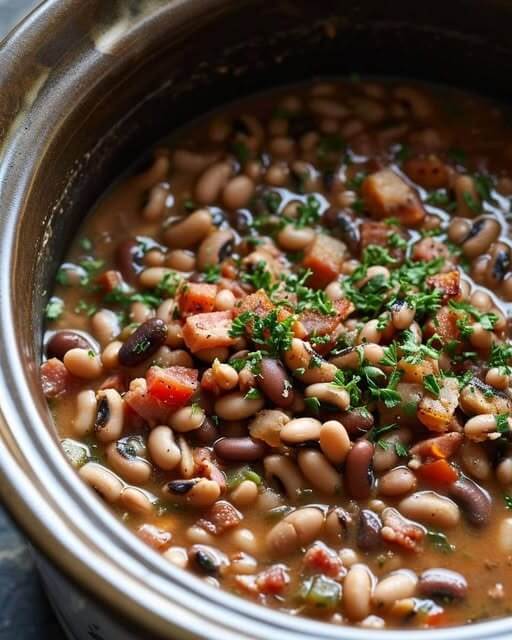
Black-eyed peas are a beloved New Year tradition, symbolizing good luck, abundance, and health for the year ahead. This version keeps the spirit of the classic dish while adding tomatoes for extra depth, color, and gentle acidity. Cooked slowly with olive oil, aromatics, herbs, and spices, these black-eyed peas are comforting, nourishing, and easy to make. They work just as well for a celebratory New Year meal as they do for everyday wholesome cooking.
Prep time: 10 minutes
Cook time: 45 to 60 minutes
Total time: About 1 hour
Servings: 6
Ingredients
Dried black-eyed peas: 2 cups (or 4 cups cooked)
Olive oil: 2 tablespoons
Onion, finely chopped: 1 medium
Garlic, minced: 4 cloves
Tomatoes, diced: 1 cup (fresh or canned)
Bay leaf: 1
Smoked paprika: 1 teaspoon
Ground cumin: ½ teaspoon
Dried oregano or thyme: 1 teaspoon
Vegetable or chicken broth: 6 cups
Sea salt: 1 to 1½ teaspoons, to taste
Black pepper: ½ teaspoon
Crushed red pepper flakes: ¼ teaspoon (optional)
Fresh parsley or cilantro, chopped: ¼ cup
Lemon juice: 1 to 2 tablespoons
Instructions
Rinse the black-eyed peas under cold water and remove any debris. Soaking is optional, but soaking for 2 to 4 hours will shorten cooking time and improve texture.
Heat olive oil in a large pot over medium heat. Add the chopped onion and cook for 4 to 5 minutes until soft and translucent.
Add the garlic and cook for 30 seconds until fragrant.
Stir in the diced tomatoes and cook for 3 to 4 minutes, allowing them to soften and release their juices.
Add smoked paprika, cumin, oregano, and bay leaf. Stir well to coat the vegetables and deepen the flavor.
Add the black-eyed peas and broth. Bring to a gentle boil.
Reduce heat, cover, and simmer for 45 to 60 minutes, until the peas are tender but not mushy.
Once the peas are soft, season with salt, black pepper, and red pepper flakes if using.
Remove the bay leaf. Stir in lemon juice and fresh herbs.
Taste and adjust seasoning. Serve warm.
Helpful Tips
Use fresh dried black-eyed peas for even cooking and better flavor.
Avoid adding salt until peas are tender to prevent tough skins.
Simmer gently rather than boiling hard.
Stir occasionally so peas do not stick to the bottom.
Tomatoes add richness, but do not overpower the dish.
Lemon juice at the end brightens the overall flavor.
This dish thickens slightly as it rests.
Tastes even better the next day.
Add extra broth if you prefer a soupier consistency.
Serve with rice, cornbread, or crusty bread.
Variations
Add diced carrots and celery for more vegetables.
Stir in spinach or kale during the last 5 minutes.
Add smoked turkey, sausage, or beef for a heartier version.
Use coconut milk for a creamy twist.
Add chili paste or extra red pepper for heat.
Replace oregano with coriander for a different aroma.
Add a splash of olive oil just before serving.
Use canned black-eyed peas and reduce simmering time to 15 minutes.
Add cumin seeds for deeper spice notes.
Serve over rice for a complete meal.
Frequently Asked Questions
Do black-eyed peas need soaking?
No, but soaking shortens cooking time and improves texture.
Can I use canned peas?
Yes. Rinse well and simmer briefly to absorb flavor.
Is this recipe vegan?
Yes, when vegetable broth is used.
Can I make this ahead of time?
Yes. The flavor improves after resting.
Can I freeze leftovers?
Yes. Freeze for up to 3 months.
Why add tomatoes?
They add richness, color, and balance the earthiness of the peas.
Is this dish gluten-free?
Yes, naturally.
Can I cook it in a pressure cooker?
Yes. Soaked peas cook in about 10 minutes.
How do I thicken the dish?
Simmer uncovered for a few extra minutes.
What pairs well with it?
Cornbread, rice, sautéed greens, or salad.
Nutrition Information
(Per Serving Approximate)
Calories: 260
Protein: 14 g
Carbohydrates: 40 g
Fat: 6 g
Fiber: 12 g
Sugar: 5 g
Iron: Good source
Conclusion
This New Year Black-Eyed Peas recipe with tomatoes honors tradition while adding extra depth and comfort. Simple ingredients, slow simmering, and balanced seasoning make it a reliable, nourishing dish that feels both celebratory and everyday-friendly. Whether enjoyed on New Year’s Day or throughout the year, it is a warm, hopeful way to gather around the table.