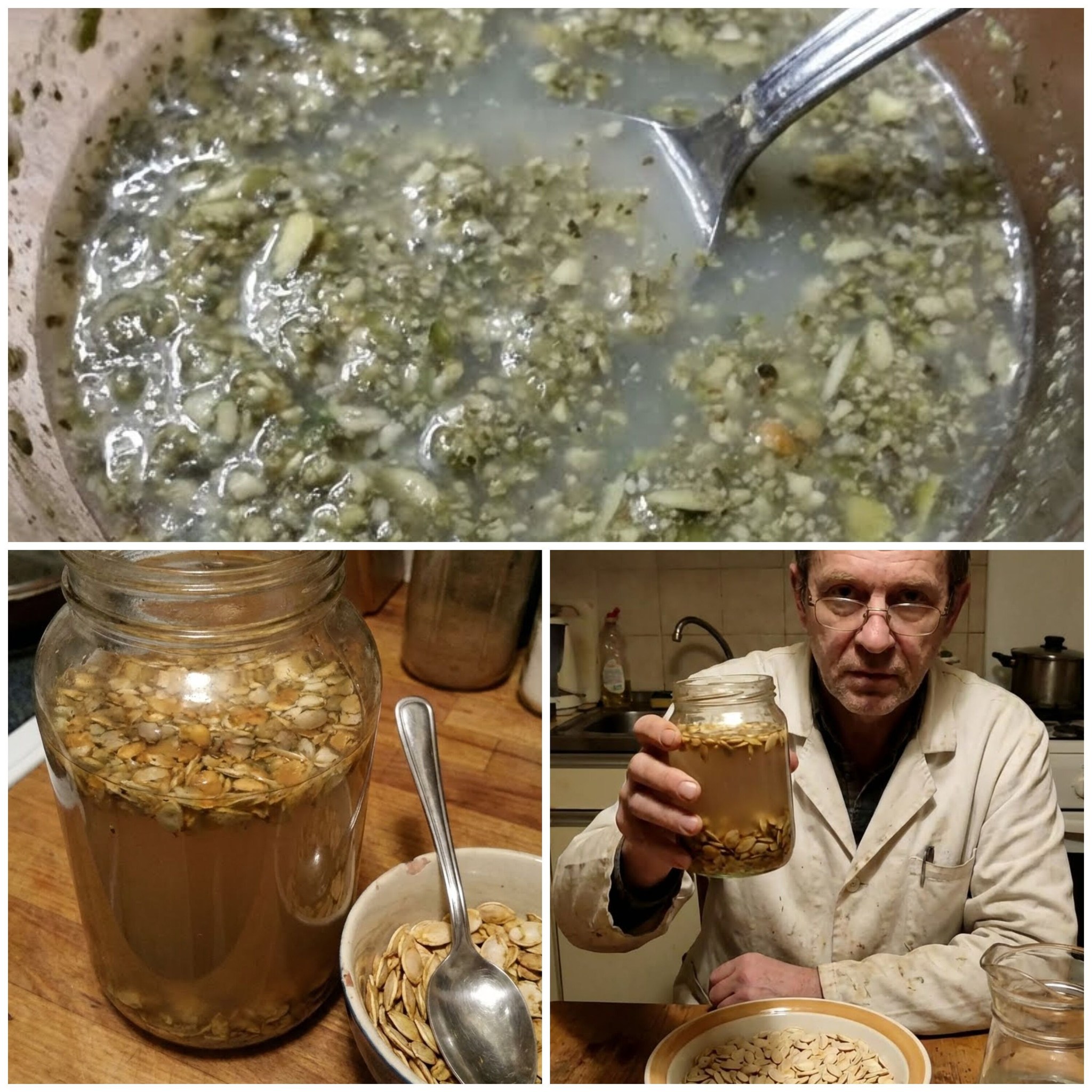
Pumpkin seeds soaked in water
Pumpkin seeds soaked in water have long been used in traditional medicine as a supportive remedy against intestinal parasites, and modern research does support some antiparasitic properties, though they are not a replacement for prescribed treatment.
Here’s the truthful, responsible explanation 👇
Why Pumpkin Seeds Are Linked to Parasite Control
Pumpkin seeds contain cucurbitacin, a natural compound that may:
Paralyze intestinal parasites
Reduce their ability to cling to the intestinal wall
Support their natural elimination through bowel movements
They are especially discussed in relation to tapeworms and roundworms in traditional use.
Pumpkin Seeds in Water: Traditional Preparation
Ingredients
1–2 tablespoons raw, unsalted pumpkin seeds (with shells removed )It’s important to use raw seeds to ensure the potency of cucurbitacin.
Next, you’ll want to rinse these seeds thoroughly under cool running water to remove any dust or residues.
Once clean, place them in a bowl of water, making sure they’re fully submerged. Allow the seeds to steep for a few hours or overnight for best results.
When ready to consume, drink the water infusion and eat the seeds on an empty stomach. This routine can be followed for up to three days to see if there’s improvement. Remember, the key here is consistency to effectively combat the parasites.
How It’s Traditionally Taken
Drink in the morning on an empty stomach
Traditionally followed by a fiber-rich meal later to aid elimination
Used for 3–7 consecutive days, then stopped
Do not exceed amounts—more is not better.
What Science Actually Says 🔬
Studies confirm antiparasitic activity in laboratory and animal studies
Human evidence is limited but promising
Works best as a supportive or preventive measure, not a cure for heavy infestations
Who May Consider This (With Caution)
Mild digestive discomfort
Suspected exposure (travel, pets, poor sanitation environments)
Preventive gut support
Who Should NOT Rely on This Alone
Children with suspected parasites
Elderly individuals with symptoms
Anyone with anemia, severe abdominal pain, weight loss, or diarrhea
Pregnant or breastfeeding women
These cases require medical diagnosis and treatment.
Signs You Need Medical Treatment Instead
Persistent diarrhea
Unexplained weight loss
Severe itching around the anus
Vomiting worms or segments
Fatigue or anemia
Extra Gut-Supportive Habits
Wash hands thoroughly
Cook meat properly
Wash fruits and vegetables well
Avoid barefoot walking in contaminated soil
Include garlic, papaya seeds, and fiber-rich foods
Health Benefits of Pumpkin Seeds
1. Rich in Essential Nutrients
Packed with protein, fiber, magnesium, zinc, iron, potassium, and healthy fats.
2. Support Heart Health
Help lower LDL cholesterol
Magnesium supports healthy blood pressure
Phytosterols protect blood vessels
3. Promote Prostate Health (Men)
Zinc and phytosterols may help reduce prostate enlargement symptoms.
4. Support Bladder Health
May help reduce frequent urination and improve bladder control.
5. Aid Digestive Health
High fiber supports digestion and healthy gut bacteria.
6. Help Control Blood Sugar
Improve insulin sensitivity—beneficial for people with diabetes when eaten in moderation.
7. Natural Anti-Parasite Properties
Contain cucurbitacin, which may help weaken intestinal parasites.
8. Strengthen Immunity 🛡️
Zinc supports immune response and wound healing.
9. Support Better Sleep 😴
Contain tryptophan and magnesium, which help regulate sleep hormones.
10. Support Bone Health
Magnesium, phosphorus, and zinc strengthen bones and joints.
11. Improve Skin Health
Vitamin E and antioxidants support skin repair and elasticity.
12. Support Hair Growth
Zinc and iron deficiencies are linked to hair loss—pumpkin seeds help replenish them.
13. Reduce Inflammation
Omega-3 and antioxidant compounds help calm chronic inflammation.
14. Support Mental Health
Magnesium supports mood balance and may reduce anxiety.
15. Aid Weight Management
Protein + fiber promote fullness and reduce cravings.
Best Ways to Eat Pumpkin Seeds
Raw or lightly dry-roasted (no oil)
Soaked overnight for easier digestion
Ground into smoothies or yogurt
Sprinkled on salads, soups, or oats
Recommended amount:
1–2 tablespoons daily
Who Should Be Careful
People with nut/seed allergies
Those with kidney issues (due to potassium/phosphorus)
Anyone on calorie-restricted diets (they’re energy-dense)
Pumpkin Seeds vs. Pumpkin Seed Oil
Seeds: Protein, fiber, minerals
Oil: Concentrated healthy fats, prostate and heart support
Both are beneficial but serve different purposes.
Final Thought
Pumpkin seeds are a simple, affordable superfood that can support many body systems naturally. Consistency—not excess—is the key.
Pumpkin seeds in water may help weaken parasites and support gut health, but they do not replace deworming medication when parasites are present. Think of them as supportive nutrition—not a guaranteed cure.