Significance of Vitamins for Women & Details about Essential Vitamins
Vitamins are essential elements that our systems require for hundreds of critical processes, including blood and bone formation, immunological support, energy levels, skin health, and much more.
Hormonal changes, menstruation, pregnancy, and (later) menopause make some vitamins particularly crucial for women. Fatigue, weak bones, low immunity, anemia, difficulties with skin and hair, and other health issues can result from a lack of these vitamins.
It is frequently safer and more advantageous to obtain vitamins from a natural, balanced diet rather than just taking pills. The main vitamins that women usually require are listed here, together with information about their natural sources, advantages, mechanisms of action, and sensible incorporation.
Key Vitamins & Their Benefits:
Vitamin D:
Why it’s important The minerals calcium and phosphorus, which are essential for healthy bones and teeth, are absorbed by your body with the aid of vitamin D. Your body may take calcium from your bones if you don’t get enough vitamin D, which will eventually weaken them.
Additional advantages include immune system support, mood regulation, and potential assistance for neuromuscular and general body function.
Natural sources include sunlight (short daily exposure), egg yolks, fortified milk or dairy, mushrooms, fortified cereals, and fatty fish (salmon, mackerel, and sardines).
How it works: When sunshine strikes the skin, the body produces vitamin D, which aids in controlling the calcium/phosphorus balance and promoting the growth and maintenance of bones. particularly important for maintaining bone density and avoiding diseases like osteoporosis in later life.
Vitamin B12:
Why it’s important Red blood cell production, neuron health, and DNA synthesis all depend on vitamin B12.
Benefits: Promotes brain health, energy metabolism, and general cellular function; prevents anemia, which can lead to weakness and exhaustion.
Natural sources include foods derived from animals, such as meat, fish, poultry, eggs, dairy products like milk and yogurt, and fortified cereals for vegetarians and vegans.
How it functions: B12 is necessary for the production of healthy red blood cells and the preservation of nerve health. Making sure you consume enough is especially crucial because deficits are more probable if you avoid animal products or because absorption declines with age.
Vitamin B9:
Why it’s important Red blood cell development, cell division, and the synthesis of DNA and RNA all depend on folate. particularly important for women who are or may become pregnant.
Benefits: Promotes healthy cell formation, preserves healthy blood, helps avoid some birth defects (neural tube defects) in the early stages of pregnancy, and may lower the risk of certain diseases.
Natural sources include citrus fruits, legumes (beans, lentils), leafy green vegetables (kale, spinach), and fortified grains and cereals.
How it works: Folate promotes the production of healthy red blood cells, which helps avoid anemia and supports general and reproductive health, as well as the development of new cells, which is particularly crucial during pregnancy and growth.
Iron:
Why it’s important Since iron is required to form hemoglobin, the protein in red blood cells that delivers oxygen throughout the body, iron is crucial, especially for women. Iron is a mineral rather than a vitamin.
Benefits: Promotes energy, stamina, and good circulation; prevents iron-deficiency anemia, which can result in weakness, exhaustion, and pale complexion.
Natural sources include red meat, fish, chicken, lentils, beans, tofu, spinach, and fortified grains. Iron absorption is enhanced when vitamin C is consumed with foods high in iron, such as citrus fruits.
How it works: Iron aids in the production of hemoglobin; if your body doesn’t have enough iron, it can’t deliver enough oxygen to tissues, which can cause symptoms like weakness and exhaustion. For women who are menstruating, pregnant, or have heavy periods, regular consumption is especially crucial.
Vitamin C:
Why it’s important As a potent antioxidant, vitamin C boosts immunity. It aids in the body’s production of collagen, which is necessary for bones, blood vessels, connective tissue, and skin
Benefits: Promotes wound healing, boosts immunity, aids in the development of healthy skin, gums, and bones; enhances the absorption of non-heme iron (from plant sources) when consumed alongside foods high in iron.
Natural sources include bell peppers, broccoli, tomatoes, potatoes, strawberries, kiwis, and citrus fruits like oranges and lemons.
How it functions: As an antioxidant, it helps shield cells from damage brought on by free radicals; it indirectly promotes blood health by increasing iron absorption; and the formation of collagen promotes the health of skin, joints, and tissues.
Vitamin E:
Why it’s important Tocopherol, or vitamin E, promotes healthy skin, hair, and eyes while shielding cells from oxidative harm.
Benefits: May prevent cell damage, promote healthy skin and hair, strengthen the immune system, and reduce the effects of aging.
Natural sources include wheat germ, spinach, avocado, nuts (almonds, peanuts), seeds (sunflower, safflower), and vegetable oils (corn, safflower).
How it functions: As an antioxidant, it neutralizes dangerous free radicals, protecting skin, blood vessels, and organs from oxidative stress and promoting general cellular health.
Additional B Vitamins and Nutrients:
Beyond simply B12 and folate, all of the B vitamins are beneficial to women. B vitamins enhance red blood cell synthesis, brain and nerve health, skin health, metabolism—the process by which food is converted into energy.
Whole grains, legumes, beans, nuts, seeds, meat or fish (for non-vegetarians), eggs, dairy, and green vegetables are examples of natural sources.
Natural Sources & How to Get These Vitamins From Diet:
Rather than depend on pills, many of these vitamins can (and should) be obtained from whole foods. Here are examples:
| Vitamin/Nutrient | Rich Natural Sources |
|---|---|
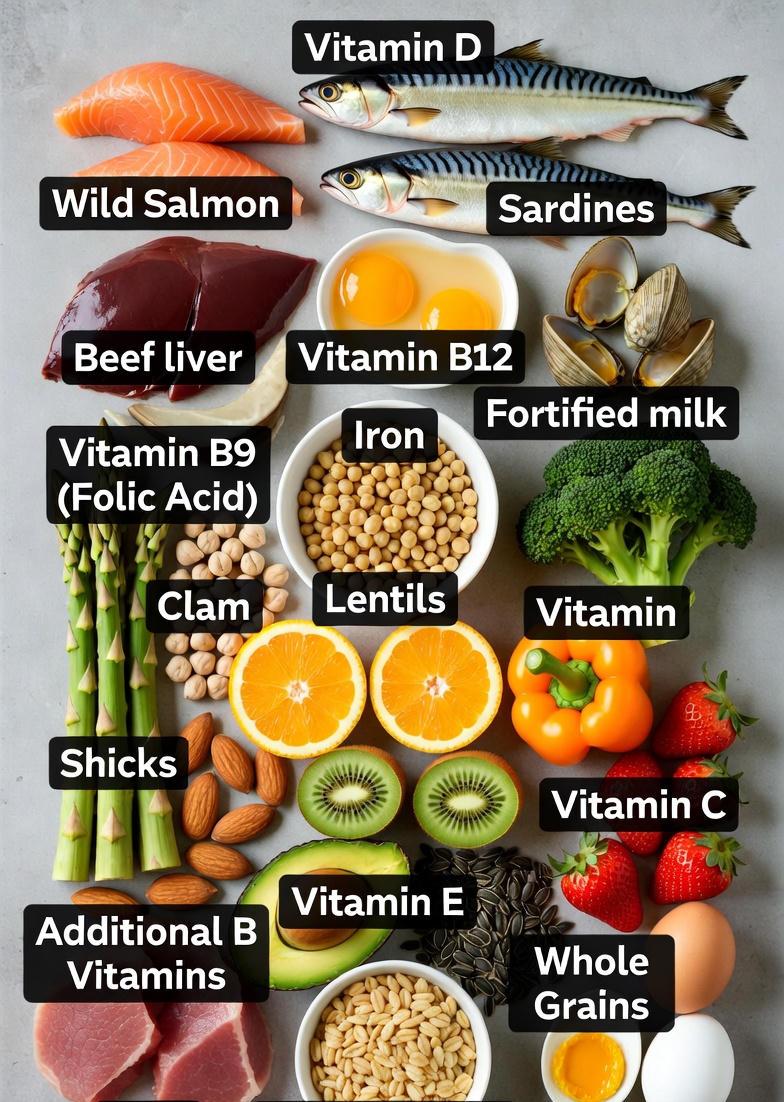
| Vitamin D | Sunlight (safe exposure), fatty fish (salmon, mackerel, sardines), eggs, fortified milk/dairy, mushrooms |
| Vitamin B12 | Meat, fish, poultry, eggs, dairy (milk, yogurt), fortified cereals (for vegetarians) |
| Folate (B9) | Leafy greens (spinach, kale), legumes (lentils, beans), citrus fruits, fortified grains/cereals |
| Iron | Red meat, poultry, fish, beans, lentils, tofu, dark leafy veggies (spinach), fortified cereals — pair with vitamin C source for better absorption |
| Vitamin C | Citrus fruits (oranges, lemons), strawberries, kiwi, bell peppers, broccoli, tomatoes, potatoes |
| Vitamin E | Nuts (almonds, peanuts), seeds (sunflower, safflower), vegetable oils (olive, safflower), wheat germ, avocado |
| B-vitamins (various) | Whole grains, legumes, beans, nuts, seeds, meat/fish (non-vegetarians), eggs, dairy, leafy veggies |
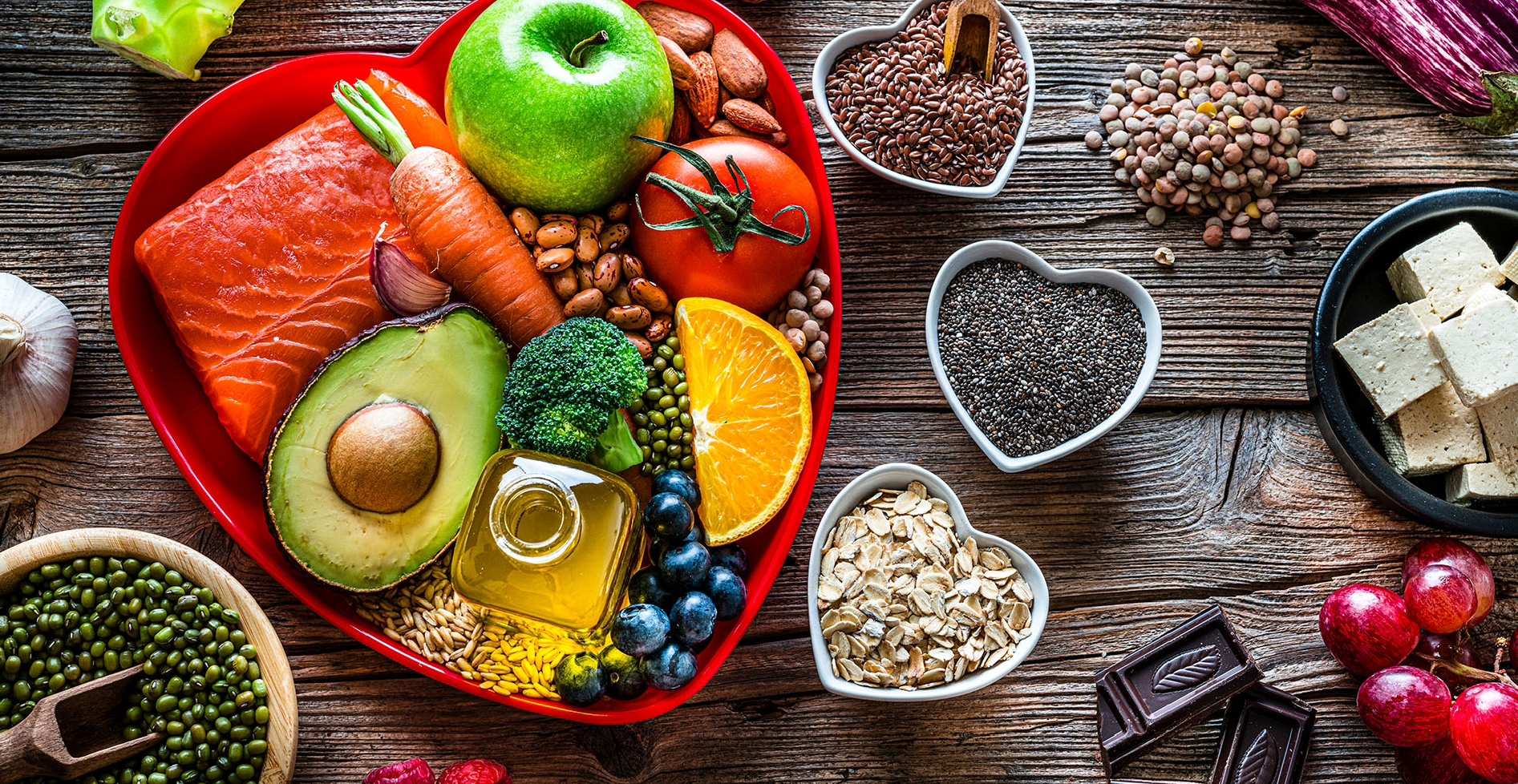
Most vitamin requirements can be met with a balanced diet that includes a range of fruits, vegetables, whole grains, legumes, nuts, and seeds, some healthy fats, lean protein, and moderate sun exposure.
How to Take These Vitamins and Use Them in Everyday Life:
Consume a varied, well-balanced diet: Throughout the week, mix fruits, vegetables, legumes and beans, nuts, seeds, some animal-based meals (if you’re not vegetarian), and entire grains.
Sunlight for vitamin D: A few times a week, spend a short period of time (10 to 15 minutes) in natural sunlight (safe exposure) to enable the skin to produce vitamin D.
Combine foods wisely: To increase iron absorption, eat plant foods high in iron, such as spinach and lentils, together with foods high in vitamin C, such as citrus and bell peppers.
Think about life stage and particular needs: Women who are postmenopausal, pregnant, nursing, or experiencing heavy menstruation may require more iron, calcium, folate, or vitamin D.
Supplements, if necessary: A supplement (after speaking with a healthcare physician) may be helpful if your diet is deficient in particular items (for instance, you are vegetarian or vegan, avoid dairy, rarely get sunlight, or have elevated demands).
The Science Underpinning the Advantages of These Vitamins:
Red blood cell production, metabolism, and the health of the brain and neurological system are all supported by vitamins like B-complex (B12, folate, B6, etc.), which aid in the conversion of proteins, lipids, and carbs from food into usable energy.
Antioxidant vitamins, such as C and E, preserve tissues, maintain the skin and immune system, and prevent chronic disease by neutralizing free radicals, which are dangerous chemicals that can destroy cells.
Building bone density, maintaining appropriate oxygen transport, supporting bones and teeth, and preventing conditions like osteoporosis and anemia are some of the structural and functional responsibilities of vitamins and minerals including calcium, iron, and vitamin D.
Vitamins like folate are essential for cellular growth, DNA synthesis, and the formation of the baby or new tissues during the pregnancy and growth phases.
Concluding Remarks: Things to Remember
The foundation is a varied and well-balanced diet. To naturally obtain many of these vitamins and minerals, try to eat a variety of whole foods, such as fruits, vegetables, lean or plant proteins, whole grains, nuts, and seeds.
Lifestyle is important: balanced food, moderate exercise, and regular sun exposure (for vitamin D) all enhance the absorption of vitamins and general health.
Certain vitamins (iron, folate, B12, vitamin D, calcium) may need particular attention during specific periods and needs, such as menstruation, pregnancy, menopause, vegetarian or vegan diets, and limited sun exposure.
While useful, supplements shouldn’t be used in place of a healthy diet: If you think about taking supplements (particularly for iron, vitamin D, and B vitamins), you should ideally do so under a doctor’s supervision because excessive or unbalanced use might lead to issues.
Vitamins are just one component of holistic wellness. For optimum health, it’s also important to get enough sleep, exercise, stay hydrated, handle stress, and maintain a healthy diet.