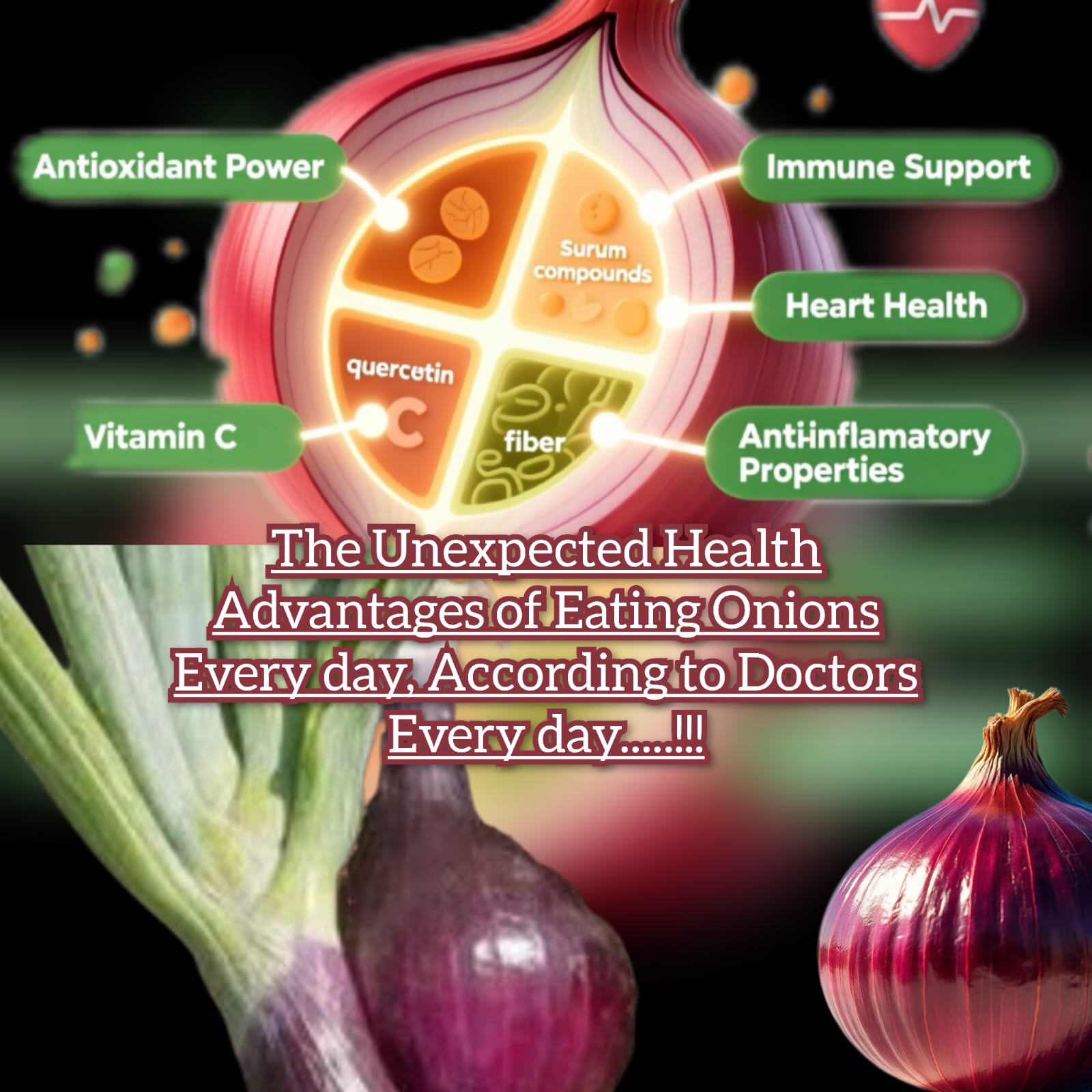
The Unexpected Health Advantages of Eating Onions Every day According to Doctors
Almost every kitchen in the world uses onions as a basic ingredient. They offer a distinct flavour that many people adore, whether they are “chopped into salsas, caramelised on burgers, simmered into sousters, or tossed raw into salads.” But this vegetable’s flavour is only one aspect of it.
Since onions are regarded as a nutritional powerhouse, many people are interested in the potential long-term health effects of consuming them on a daily basis.
Even though onions are a fantastic complement to many dishes, it’s crucial to keep in mind that each person’s body responds differently to particular foods. “Nutritionists and doctors warn that although they have many advantages, overindulging or combining them with certain foods can have negative effects, particularly for those with certain medical conditions.”
The science behind onions and safe ways to include them into your dishes will be discussed in this article.
Assistance with Long-Term Health:
Garlic, leeks, and onions are all members of the Allium family. Researchers have been investigating the potential health benefits of these veggies for a long time. In particular, “regular onion consumption especially raw or lightly cooked is associated with a lower risk of stomach and colorectal cancers,” according to studies.
This is mostly because the veggie contains natural compounds:
One kind of antioxidant that aids in preventing cell damage is quercetin.
Fisetin: A substance that scientists investigate for its capacity to promote normal cell life cycles.
Choose colorful onions for maximum benefit because red and yellow onions contain more quercetin than white onions.
Promoting Bone Health:
When it comes to maintaining healthy bones, many people think of dairy products, but onions could also be a useful addition to that regimen. “Women who ate onions daily had 5% higher bone density than those who rarely ate them,” according to a long-term study of women.
The body may benefit from onions by:
lessening the strain on bone tissues.
enhancing the body’s inherent antioxidant capacity.
safeguarding the cells that maintain the strength of bones.
Because of this, they are an excellent vegetable option for those who want to keep their strength and mobility as they age.
Keeping Blood Sugar Levels in Check:
Onions have several intriguing qualities for anyone who are interested in metabolic health. They include certain sulfur compounds that could improve the body’s ability to control sugar.
People with type 2 diabetes who consumed 100g of raw red onion saw a significant drop in blood sugar within 4 hours, according to certain findings.
Although this is intriguing, it’s crucial to keep in mind that “onions can be a powerful supportive food in a diabetes-friendly diet but this doesn’t replace medication.” When it comes to any medical concerns, always heed the advice of a specialist.
Supporting the Immune System:
Numerous minerals found in onions, including zinc and vitamin C, are believed to support the immune system. As a result, “onions act like nature’s multivitamin for immunity.” Traditional recipes frequently employ them to help the body deal with common seasonal ailments like sore throats and colds. “Onions have natural antimicrobial and expectorant properties that soothe sore throats and loosen mucus,” for instance.
Additional Possible Health Benefits:
Heart Health: According to some research, onions’ antioxidants may help keep blood pressure and cholesterol levels within normal ranges.
Digestion: The “good” bacteria in your stomach are fed by the high fiber content of onions.
Stress management: Although scientists are still searching for further proof, some traditional societies think onions might help reduce stress.
Crucial Things to Think About and Take Precautions:
Onions are nutritious, but not everyone is a good fit for them. It’s critical to pay attention to your body and be mindful of any possible negative effects.
Digestive Comfort
“Onions (especially raw) can trigger heartburn, bloating, or irritation” for certain people. Try cooking onions fully if you find them uncomfortable because this usually makes them easier for your stomach to manage.
Blood Pressure
Although onions are known to promote heart health, “onions may lower blood pressure further, leading to dizziness or fatigue in those already on BP medications.” You might want to keep an eye on how you feel after consuming a lot of food if your blood pressure is naturally low.
Watch These Food Combinations
People are cautious about what they eat with onions in some traditional wellness systems, such as Ayurveda. Combinations with “honey” or “seafood like shrimp or fish” should be avoided, according to some. Some people believe that avoiding these blends helps prevent bloating or indigestion, even though “no strong evidence shows these combinations are dangerous for most people.”
In brief, what is the recommended amount of food?
Many recommend a reasonable dosage so you can experience the advantages without the drawbacks. Approximately 1/4 to 1/2 cup of chopped onions should be consumed each day.
Consuming far more than this could result in:
bloating or gas in the stomach.
Heartburn on occasion.
strong breath or body odor.
You can benefit from onions’ nutrients while maintaining the flavor and balance of your meals by incorporating a tiny amount of them into your everyday cooking.