What You Eat Is Important But When You Eat Is Equally Important
What you eat is important, but when you eat is equally important. When eaten at the incorrect time of day, many nutritious and healthful foods can become toxic.
Eating against the natural cycle of your digestive system, metabolism, hormones, and energy levels might cause bloating, acidity, weight gain, sleep issues, or nutritional loss.
In order to improve digestion, energy, and general health, this article discusses ten popular foods you should avoid at particular times, the risks of eating at the wrong time, and what to do instead.
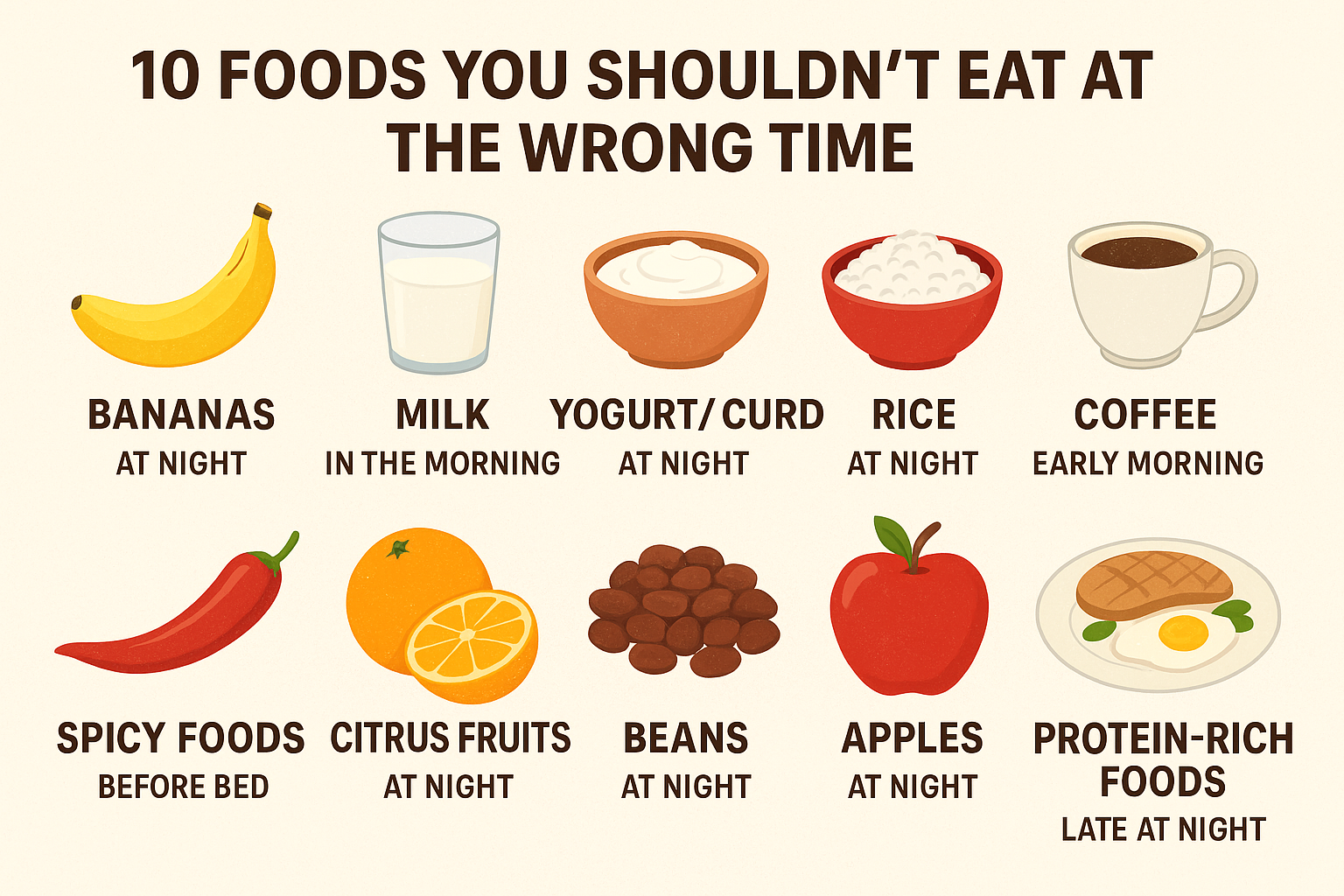
Foods You Shouldn’t Eat at the Wrong Time:
1. Bananas:
Why Not at Night
Bananas increase mucus production and contain magnesium, which can relax muscles too much at bedtime, potentially disturbing sleep.
Health Issues
Indigestion
Increased mucus
Bloating
Best Time to Eat
Morning or afternoon.
Benefits at the Right Time
Boosts energy, supports digestion, and provides quick nourishment.
2. Milk:
Why Not in the Morning
Drinking milk on an empty stomach can cause heaviness or nausea for many people.
Health Issues
Bloating
Stomach heaviness
Slow digestion
Best Time to Eat
Night, as it promotes calmness and better sleep.
Benefits at the Right Time
Supports bone health and improves sleep quality.
3. Yogurt / Curd:
Why Not at Night
Fermentation increases gases; eating curd late can lead to mucus build-up.
Health Issues
Cough
Cold symptoms
Gas and acidity
Best Time to Eat
Morning to evening, especially after meals.
Benefits at the Right Time
Improves gut health, digestion, and immunity.
4. Rice:
Why Not at Night
Rice is rich in carbohydrates, which may cause weight gain when eaten before sleeping because metabolism slows down.
Health Issues
Weight gain
Indigestion
Lethargy
Best Time to Eat
Lunch time.
Benefits at the Right Time
Provides energy and easy digestion during active hours.
5. Coffee:
Why Not Early Morning (Empty Stomach)
It stimulates acid release and irritates the digestive lining.
Health Issues
Acidity
Gut irritation
Anxiety and palpitations
Best Time to Eat
Mid-morning (1–2 hours after breakfast).
Benefits at the Right Time
Improves focus and energy without harming the stomach.
6. Spicy Foods:
Why Not Before Bed
Spices trigger acidity and increase body temperature.
Health Issues
Acid reflux
Insomnia
Heartburn
Best Time to Eat
Lunch time, when digestion is strongest.
Benefits at the Right Time
Boosts metabolism and improves circulation.
7. Citrus Fruits (Oranges, Grapefruit, Lemon):
Why Not at Night
High acidity irritates the stomach and may disturb sleep.
Health Issues
Acidity
Heartburn
Dental enamel erosion if eaten repeatedly
Best Time to Eat
Morning or early afternoon, on a not-empty stomach.
Benefits at the Right Time
Strengthens immunity and improves digestion.
8. Beans and Lentils:
Why Not at Night
Their high fiber and complex sugars can cause gas and bloating.
Health Issues
Gas
Indigestion
Heavy stomach
Best Time to Eat
Lunch.
Benefits at the Right Time
Provides protein, regulates blood sugar, and boosts energy.
9. Apples:
Why Not at Night
The fiber can ferment and cause gas when eaten late.
Health Issues
Gas
Bloating
Acidity
Best Time to Eat
Morning, when the body can fully digest fiber.
Benefits at the Right Time
Cleanses the digestive system and stabilizes blood sugar.
10. Protein-Rich Foods (Chicken, Eggs, Paneer):
Why Not Late at Night
High-protein foods take longer to digest, keeping the digestive system active during sleep.
Health Issues
Poor sleep
Stomach heaviness
Bloating
Best Time to Eat
Lunch or early dinner.
Benefits at the Right Time
Builds muscle, supports metabolism, and keeps you full.
Health Problems Caused by Eating Food at the Wrong Time:
Acid reflux / acidity
Bloating and gas
Sluggish digestion
Weight gain
Hormonal imbalance
Reduced nutrient absorption
disturbed sleep
Low energy during the day
Eating at the wrong time confuses the body’s natural rhythm and leads to long-term digestive issues.
How to Prevent Problems:
Eat meals at fixed times
Avoid heavy late-night snacks
Don’t eat fruits immediately after meals
Eat slowly and chew well
Keep a 3-hour gap between dinner and sleep
Avoid drinking cold water right after food
These habits help the body process food more efficiently.
Best Overall Times to Eat Food:
Breakfast: Within 1–2 hours after waking
Lunch: Between 12 PM – 2 PM
Dinner: 6 PM – 8 PM
Snacks: Mid-morning and mid-afternoon
Fruits: Morning to afternoon
Heavy carbs: Afternoon
Protein: Afternoon to early evening
Why Eating at the Right Time Is Beneficial:
Helps maintain ideal body weight
Improves gut health
Gives better sleep
Enhances metabolism
Boosts energy and focus
Balances hormones
Prevents acidity, bloating, and gas
Your digestive system works best when you follow your body’s natural cycle.
Concluding Remarks:
Food is fuel, but the secret to reaping its full advantages is time. When consumed at the incorrect time, even the healthiest foods can become dangerous. You can benefit from better digestion, increased energy, and greater long-term health by knowing your body’s rhythm and timing each meal.
Little adjustments to your schedule might have a significant impact on your daily mood.