
Introduction
There is a specific kind of frustration that comes from standing in front of a full refrigerator and still feeling like there is nothing to cook.
Usually the problem is not a lack of food. It is that the meal plan started with a recipe instead of starting with what was already there.
Pantry meal planning with what you already have flips that order. Inventory comes first, meal ideas come second, and the grocery store only enters the picture at the very end, for the few things actually missing.
This approach is especially useful for households trying to spend less at the store or reduce how much food quietly spoils before it gets used. Below is the actual process for turning an existing pantry, fridge, and freezer into a realistic week of meals.
Step 1: Do a Quick Pantry Inventory
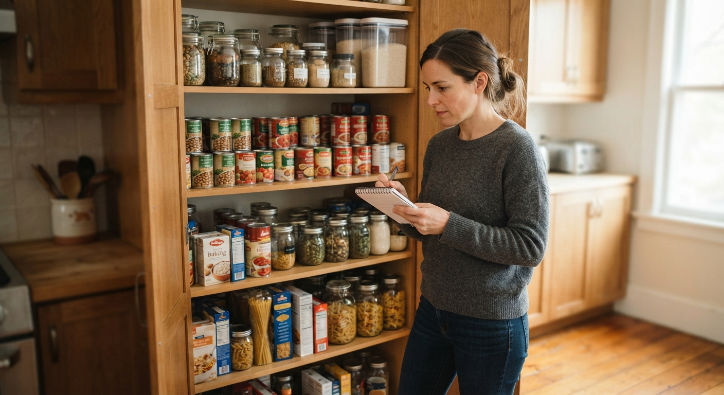
Start with the pantry shelves. Walk through what is there, not to organize it perfectly, but to notice what you have in meaningful quantity. Grains, canned goods, dried beans, pasta, oils, and seasonings are the core building blocks most weekly meals depend on.
What tends to work best in a real household is writing this down rather than trying to hold it all in memory. A short list on paper or in a phone notes app is enough.
Step 2: Check the Refrigerator and Freezer
Move to the fridge and freezer next. Note fresh produce, proteins, dairy, and anything frozen that has been sitting for a while.
Pay particular attention to items nearing the end of their useful life, since those should shape your plan first. Also read How to Make a Weekly Meal Plan From Scratch: A Complete System.
Step 3: Identify What Needs to Be Used Soon
Separate your inventory into two mental categories: things that will keep for weeks, and things that need to be used in the next few days. Soft vegetables, opened dairy, and thawed proteins usually belong in the second group.
This is the heart of pantry meal planning with what you already have. The EPA’s tips for reducing food waste at home recommend essentially this same approach, suggesting households cook or eat what is already available before buying more.
Building meals around the second group first is what actually prevents food waste, rather than just planning meals in a random order and hoping nothing spoils.
Step 4: Group Ingredients by Type
Once you know what you have, group it loosely by category: proteins, vegetables, starches, and flavor builders like sauces, spices, and aromatics. Seeing the groups side by side makes it much easier to spot realistic meal combinations than scanning a single long list.
Step 5: Find Meal Combinations Instead of Searching for Recipes First
Instead of opening a recipe site and hoping your ingredients match, work backward from what is in front of you. A protein, a vegetable, and a starch is a reliable formula for most dinners. From there, the seasoning and cooking method are what create variety, not the ingredients themselves.
Step 6: Choose Recipes That Flex Around What You Have
When you do look for recipe inspiration, search using your actual ingredients rather than a specific dish name. This naturally surfaces recipes built for flexibility, and it is far more productive than trying to force your pantry to match one very specific recipe.
Step 7: Plan Substitutions Ahead of Time
Decide in advance where you can swap one ingredient for a similar one. If a recipe calls for a vegetable you do not have, note which one you do have that could reasonably work instead. Planning this ahead avoids a mid cooking scramble.
Step 8: Build Meals Around Pantry Staples
Let shelf stable staples like rice, pasta, canned beans, and canned tomatoes anchor at least a few meals during the week. These items store well, cost relatively little, and pair easily with whatever fresh ingredients need to be used.
Step 9: Plan for Leftovers on Purpose
If a recipe naturally makes extra, decide right away whether that becomes lunch the next day or a second dinner later in the week. Planning leftovers as an intentional part of the week, rather than an afterthought, keeps food moving instead of sitting untouched.
Step 10: Create a Short Grocery List for What Is Actually Missing
Once your meals are mapped out, the only remaining step is listing what you genuinely do not have. This list should be short, focused, and limited to real gaps, not a full weekly shop from scratch.
Illustrative Example
Imagine checking your kitchen on a Sunday afternoon and finding half a bag of rice, a carton of eggs, one bell pepper, a bag of frozen mixed vegetables, a block of cheddar cheese, and a nearly full bottle of soy sauce.
From that inventory alone, a realistic week could include a vegetable fried rice using the rice, eggs, pepper, and frozen vegetables, an omelet using the remaining eggs and cheese, and a simple stir fry variation using the soy sauce as a base sauce with whatever vegetables are left.
Only a small grocery top up, perhaps fresh garlic and one more protein, would be needed to round out the week. This is an illustrative example meant to show the process, not a documented case study of a specific household.
Conclusion

Pantry meal planning with what you already have is less about following a specific recipe and more about changing the order of operations. Inventory first, meal planning second, and grocery shopping last is a simple sequence, but it consistently leads to less waste and lower grocery spending.
The FoodKeeper storage guidance from the United States Department of Agriculture is a useful reference for double checking how long specific items typically stay good, which makes it easier to prioritize the right ingredients first.
Try this approach for just one week before your next full shopping trip and see how much of your plan comes together from food you already own.
Frequently Asked Questions
What is pantry meal planning with what you already have?
It is a meal planning method where you inventory your pantry, refrigerator, and freezer first, build meals around those existing ingredients, and only shop for the small number of items you are missing.
How do I start planning meals from what is already in my kitchen?
Begin with a quick inventory of your pantry, fridge, and freezer, noting which items need to be used soon. Build your first one or two meals around those items before planning the rest of the week.
Does pantry meal planning actually save money?
It can, since it reduces duplicate purchases and helps you use ingredients before they spoil, which lowers how much food gets thrown away and rebought unnecessarily.
What if I do not have enough ingredients for a full meal?
Use your pantry inventory as the base and add a short, targeted grocery list for whatever is genuinely missing, rather than shopping for an entirely new set of meals.
How is pantry meal planning different from a recipe roundup?
A recipe roundup starts with a dish and asks you to buy ingredients for it. Pantry meal planning starts with your existing ingredients and works backward to figure out what meals they can become.
What pantry staples are most useful to always have on hand?
Items like rice, pasta, canned beans, canned tomatoes, and basic oils and seasonings tend to be the most flexible, since they combine easily with whatever fresh ingredients are available.
How often should I check my pantry before meal planning?
Doing a quick inventory once a week, right before you plan meals, is usually enough to catch items that need to be used soon.