
Dinner time with a picky eater in the house often turns into two questions asked every single night: what will everyone actually eat, and does this mean cooking two separate meals again.
Family meal planning for picky eaters is not about getting a child to eat everything on the plate. It is about building a weekly system that keeps mealtime manageable for the person cooking while still giving picky eaters a reasonable way into the meal.
What tends to work best is not a rigid meal plan, but a flexible structure that plans for both familiar foods and small, low pressure opportunities to try something new.
Rethinking What “Meal Planning” Means With a Picky Eater at the Table
A lot of meal planning advice assumes everyone at the table will eat the same thing without complaint. That assumption breaks down quickly in a household with a picky eater.
Instead of planning meals that require universal agreement, plan meals with a flexible structure: one familiar, dependable component for the picky eater, alongside the fuller meal for everyone else.
This is not about giving up on variety. It is about building meals that can flex in real time without requiring a second stove burner every night.
Build a Flexible Weekly Menu Instead of a Fixed One
Rather than planning seven distinct dinners, consider planning around a smaller rotation of dependable meal formats that can shift slightly based on the day.
A taco night, a pasta night, and a build your own bowl night can each be adjusted slightly week to week with different proteins or vegetables, while still following a format your picky eater already recognizes and trusts.
This flexibility matters because picky eating is rarely static. A food that was accepted last week might be refused this week, and a flexible format absorbs that change without derailing the whole plan.
Use Familiar Foods as the Anchor, Not the Whole Meal
One approach I find particularly practical is making sure every family dinner includes at least one food the picky eater already reliably accepts, alongside the rest of the meal.
This does not mean cooking a separate dish. It might mean plain rice sits next to a more complex stir fry, or plain pasta is served alongside a more heavily sauced version for everyone else.
The American Academy of Pediatrics recommends including at least one food your child likes with each meal while still continuing to offer a balanced range of other foods, which keeps the table shared rather than split into separate meals.
Build Your Own Meals and Deconstructed Formats
Meals where each person assembles their own plate tend to work particularly well for picky eaters because they lower pressure without lowering exposure to new foods.
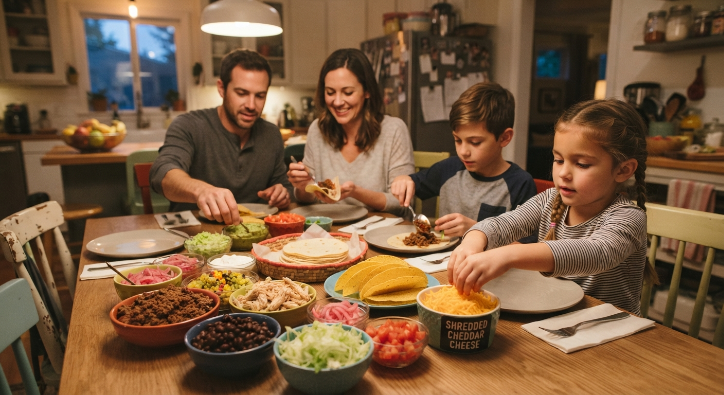
Taco bars, grain bowls, baked potato bars, and pizza nights where toppings are offered separately all allow a picky eater to build a plate they feel in control of, while still sitting at the same table eating largely the same meal as everyone else.
This approach also reduces the mental load of cooking, since one base meal serves the whole family with individual customization rather than requiring entirely separate dishes.
Introducing New Foods Without Turning Dinner Into a Negotiation
Gradual exposure tends to work better than pressure. Instead of insisting a new food be eaten, place a very small portion of it on the plate alongside familiar foods, with no expectation that it needs to be finished or even tried that night.
Over repeated, low pressure exposures across several weeks, many children become more willing to try new foods on their own timeline. Also read How to Start Meal Planning When You Hate Cooking (A Realistic Guide).
This is a planning strategy, not a guarantee, and every child responds differently. The goal of family meal planning here is simply to make room for that gradual exposure without turning it into the focus of every meal.
Keep One Manageable Meal Instead of Cooking Separately
A common trap is ending up with two completely separate dinners every night, one for the picky eater and one for everyone else. This is exhausting to sustain long term. Instead, look for one meal that can be prepared with minor adjustments rather than two full recipes.
If the family meal is a curry, a plain version of the rice or protein served on the side can be enough of an adjustment without requiring an entirely separate dish.
Planning Backup Options Without Making Them the Default
It helps to have one or two easy backup meals in your weekly rotation, such as a simple sandwich or a bowl of pasta with butter, for nights when the planned meal is met with strong resistance.
The key is treating this as an occasional backup rather than the default option every night, since relying on it too often can undercut the rest of the plan.
Involving Kids in Planning and Grocery Shopping
Where age appropriate, letting a child help choose a vegetable at the store or pick between two dinner options for the week can increase their investment in the meal.
This does not need to be a daily practice. Even involving them once a week in a small decision can shift dinner from something that happens to them into something they had a small part in choosing.
Grocery Shopping With Picky Eaters in Mind
When building your weekly grocery list, keep a small rotation of dependable staples on hand at all times, such as a preferred bread, a favorite fruit, or a specific pasta shape.
Running out of a picky eater’s reliable staple often creates more mealtime stress than any single dinner choice, so treat those items as non negotiable staples on your list rather than optional extras.
Handling School Lunches and Changing Preferences
If school lunches are part of your planning, apply the same logic used at dinner: pack at least one dependable, accepted item alongside something slightly less familiar, rather than packing an entirely unfamiliar lunch.
Preferences also shift over time, sometimes week to week, so it helps to revisit your rotation every few weeks rather than assuming today’s accepted foods will always stay the same.
Reducing Parental Stress Around Mealtime
A meal plan built for a picky eater should also protect the person doing the cooking. Planning one shared, flexible meal each night, with a dependable component built in, tends to reduce the daily decision fatigue that comes from wondering what will and will not be accepted that evening.
Complete 7 Day Family Meal Planning Example
Monday: Build your own tacos Base: seasoned ground meat or beans, shells or tortillas Familiar anchor: plain rice or shredded cheese on the side Toppings offered separately so each family member customizes their own plate
Tuesday: Pasta night Base: pasta with a light sauce for the family Familiar anchor: a portion of plain buttered pasta set aside before sauce is added
Wednesday: Sheet pan chicken and vegetables Base: roasted chicken and a mix of vegetables Familiar anchor: one vegetable the picky eater already accepts, kept separate from less familiar ones
Thursday: Backup night A simple, low effort meal such as grilled cheese and soup, used occasionally rather than as a weekly default
Friday: Pizza night Base: individual or half sheet pizzas Familiar anchor: plain cheese option alongside more adventurous toppings for others
Saturday: Baked potato bar Base: baked potatoes with toppings offered separately Familiar anchor: butter and cheese as a reliable starting option
Sunday: Family favorite meal A meal the whole family already enjoys together, used as an anchor point for the week and a low stress way to end the rotation
Conclusion

Family meal planning for picky eaters works best as a flexible system, not a fixed menu.
By building meals around a dependable familiar anchor, using build your own formats to lower pressure, and planning backup options without relying on them constantly, you can keep dinner manageable without cooking two separate meals every night.
Over time, small, low pressure exposure to new foods tends to do more than any single mealtime battle, and a realistic weekly structure protects both the picky eater and the person doing the cooking.
Frequently Asked Questions
How do I meal plan for a family with a picky eater without cooking two meals?
Build meals around a shared base with a dependable, familiar component included, such as plain rice or pasta served alongside a more complex dish, so everyone eats a version of the same meal.
What are good build your own meal ideas for picky eaters?
Taco bars, grain bowls, baked potato bars, and pizza nights with separated toppings all work well because they let a picky eater customize their plate while still sharing the same meal as the family.
How often should I introduce new foods to a picky eater?
Offering a small, optional portion of a new food alongside familiar favorites once or twice a week is a reasonable pace, without pressure to finish or try it every time.
Should I always have a backup meal ready for picky eaters?
It helps to have one or two backup options in your rotation, but using them only occasionally works better than relying on them as a nightly default.
How do I plan school lunches for a picky eater?
Include at least one dependable, accepted item in every lunch, alongside one item that is slightly less familiar, similar to the approach used at family dinners.
Does family meal planning for picky eaters mean giving up on family meals together?
No. The goal is to keep everyone eating together using flexible, shared meal formats rather than splitting into separate meals for different family members.
How do I handle it when a previously accepted food is suddenly refused?
Preferences often shift over time, so it helps to revisit your weekly rotation every few weeks and adjust familiar anchors as needed rather than assuming they will stay the same indefinitely.