
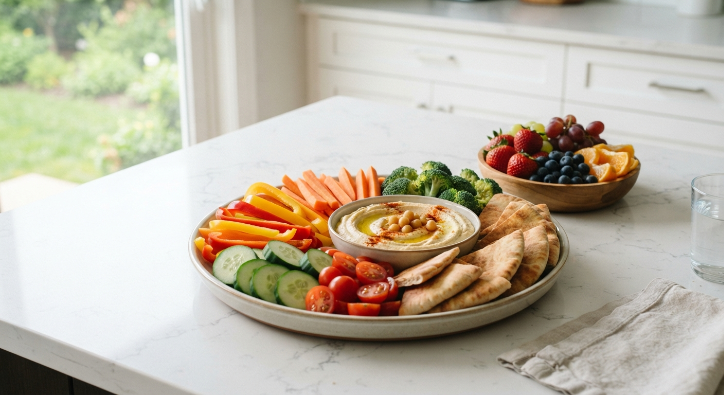
By July, the last thing most people want is a hot kitchen making an already hot house even warmer. A no cook meal plan for summer solves that specific problem: it lets you eat real meals, not just snacks, without ever turning on the stove or oven.
This is not about giving up variety, it is about shifting where that variety comes from.
The planning challenge here is different from a normal weekly meal plan. You are not deciding what to cook, you are deciding what to combine.
That shift takes a bit of practice, but once you have a system, a no cook week is genuinely easier to plan than a cooked one.
Why No Cook Meals Make Sense in Hot Weather
Running an oven or stove during a heat wave adds warmth to a kitchen that is already working against your air conditioning.
Beyond comfort, cold and room temperature meals also tend to require less active preparation time, which matters when energy is lower in the heat.
What tends to work best is building meals around ingredients that are already ready to eat, so assembly replaces cooking entirely.
Building a No Cook Weekly Plan
Start by identifying a handful of base components you like: a protein, a grain or bread, a vegetable, and a fruit. From there, you rotate combinations rather than inventing a new meal from nothing each day.
Useful no cook building blocks include:
Fresh ingredients such as tomatoes, cucumbers, leafy greens, and berries Ready to eat proteins such as rotisserie chicken, canned tuna, hard boiled eggs, and deli meat Yogurt and cottage cheese for quick protein rich meals Canned foods such as beans and corn, rinsed and added cold Bread, tortillas, and crackers for wraps and sandwiches Fruit as a side or dessert with no preparation needed
Salads, Wraps, and Sandwiches as Meal Categories
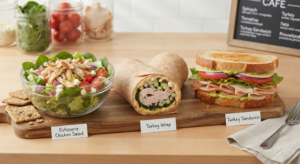
Rather than treating salads, wraps, and sandwiches as separate meal types, treat them as three formats for the same rotating ingredients.
The same chicken, greens, and dressing that make a salad on Monday can become a wrap on Wednesday with the addition of a tortilla.
This kind of ingredient overlap is the real planning trick behind a successful no cook week. Buying five ingredients that can be recombined into ten meals is far more efficient than buying ten separate ingredients for ten separate meals.
Keeping Preparation Minimal
Minimal preparation does not mean zero effort, it means effort that does not involve heat. Washing and chopping vegetables, hard boiling eggs in advance, or portioning yogurt into containers are all still valid parts of a no cook plan. The goal is removing the stove and oven, not removing all preparation.
Hydration Related Considerations
Hot weather increases fluid needs, and meals built around water rich foods, like cucumbers, watermelon, and yogurt, can support this alongside drinking water throughout the day.
This is a general wellness consideration rather than a medical recommendation, and anyone with specific hydration or health concerns should speak with a healthcare provider.
Food Storage and Safety During Hot Weather
Warm weather increases the risk of foodborne illness because bacteria grow faster in heat. According to the USDA’s guidance on keeping food safe during summer, perishable foods can normally sit out for up to two hours before needing to be chilled or discarded, but when the temperature is above 90 degrees Fahrenheit, that window shrinks to just one hour.
This matters directly for a no cook plan, since so many of the meals involve perishable, ready to eat ingredients like deli meat, yogurt, and cut fruit.
A USDA press release on summer food safety also notes that the danger zone for bacterial growth sits between 40 and 140 degrees Fahrenheit, which is exactly the range many foods pass through if left out too long on a warm day.
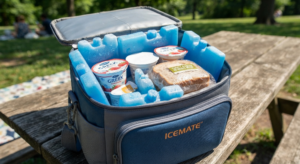
Practical takeaways: keep cold ingredients in the refrigerator until just before eating, use an insulated bag with ice packs for meals eaten away from home, and do not leave prepared meals sitting on a counter through a hot afternoon.
Avoiding Food Waste
Because no cook meals rely heavily on fresh produce, waste can creep in if ingredients are bought without a plan. Buying only what fits your weekly rotation, and using the more perishable items, like leafy greens, earlier in the week, helps keep waste down. Also read Cheap Meal Plan for Two People a Week (7 Day Plan and Grocery List).
A Complete 7 Day No Cook Summer Meal Plan
Day 1 Breakfast: Yogurt with berries and granola Lunch: Turkey and cheese wrap with lettuce and tomato Dinner: Rotisserie chicken salad with mixed greens and vinaigrette
Day 2 Breakfast: Overnight oats made the night before with milk and fruit Lunch: Tuna salad on crackers with cucumber slices Dinner: Bean and corn salad with avocado and lime
Day 3 Breakfast: Cottage cheese with sliced peaches Lunch: Leftover rotisserie chicken salad from Day 1 Dinner: Deli turkey sandwich with a side of fresh fruit
Day 4 Breakfast: Yogurt parfait with granola and berries Lunch: Hard boiled eggs with a bagged salad kit Dinner: Hummus, pita, cucumbers, and cherry tomatoes as a platter style meal
Day 5 Breakfast: Overnight oats Lunch: Turkey wrap, repeated with fresh lettuce Dinner: Canned salmon salad with greens and a squeeze of lemon
Day 6 Breakfast: Cottage cheese with pineapple Lunch: Bean and corn salad, leftover portion Dinner: Cold pasta salad with cherry tomatoes, mozzarella, and olive oil
Day 7 Breakfast: Yogurt with fruit Lunch: Hummus and vegetable platter, leftover style Dinner: Rotisserie chicken tacos using cold tortillas, lettuce, and salsa
Illustrative Example
Consider a fictional reader, Priya, who works from home in an apartment with weak air conditioning. During a particularly hot stretch of summer, she stopped cooking entirely for two weeks and built meals from rotating salads, wraps, and yogurt bowls instead.
She found grocery shopping simpler, since she was buying fewer distinct ingredients, and her kitchen stayed noticeably cooler in the afternoons.
CONCLUSION
A no cook meal plan for summer is less about eliminating cooking forever and more about giving yourself a break from it during the hottest, most draining part of the year.
With a small set of overlapping ingredients, rotated across salads, wraps, and simple platters, a full week of meals comes together without ever needing the stove or oven.
Because this is a seasonal pattern, the same basic structure works every summer, not just once.
FAQS
Is a no cook meal plan actually healthy?
Yes, when it includes a mix of proteins, vegetables, fruit, and whole grains. No cook does not mean low nutrition, it simply means skipping heat based preparation.
How long can perishable no cook ingredients sit out safely?
Generally up to two hours, or one hour if the temperature is above 90 degrees Fahrenheit, before they should be chilled or discarded.
What proteins work well for no cook meals?
Rotisserie chicken, canned tuna or salmon, deli meat, hard boiled eggs, hummus, and cottage cheese all work without any additional cooking.
Can a no cook meal plan work for a whole family?
Yes. Platter style meals, like the hummus and vegetable dinner in this plan, scale easily and let everyone build their own plate.
How do I keep no cook meals from getting repetitive?
Rotate the same base ingredients into different formats, such as turning a salad into a wrap or a sandwich, rather than buying entirely new ingredients each day.
Does a no cook plan save time compared to cooking?
Generally yes, since assembly takes far less active time than cooking, though some prep, like washing produce or hard boiling eggs, is still involved.
Is this meal plan only useful in summer?
It is designed for hot weather specifically, but the same no cook approach also works well during any period when cooking feels impractical.