
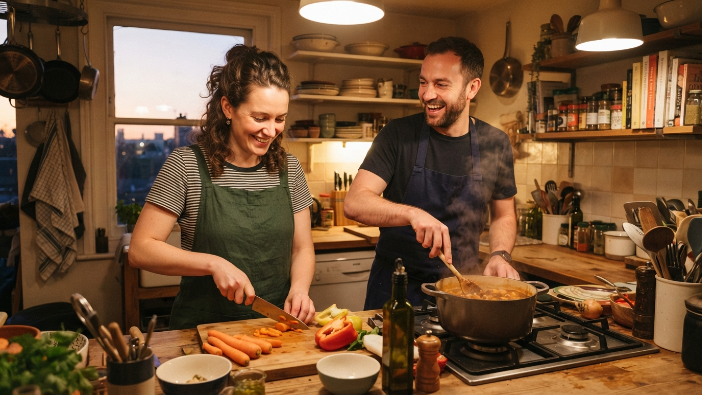
Planning meals for two people sounds simple until you actually try it. One person wants pasta three times a week, the other wants to eat more vegetables, and somehow you both end up ordering delivery on Wednesday anyway.
A weekly meal plan for a couple has to solve a slightly different problem than a plan built for one person or a full family.
You are cooking for two appetites, two schedules, and often two sets of preferences, but without the extra hands or built in structure a bigger household naturally has.
In my experience, the couples who stick with meal planning are not the ones with the most elaborate spreadsheets. They are the ones who build a plan that is flexible enough to survive a late work night and specific enough that grocery shopping only takes fifteen minutes.
Why Meal Planning for Two Is Its Own Challenge
A single person can cook whatever they want and eat the same thing twice without complaint. A family of four often needs bigger batches and more repetition to keep costs down.
A couple sits in between. You need portions that make sense for two adults, not four, and you need enough variety that neither person gets bored, but not so much variety that half the fridge goes untouched by Sunday. Also read No Cook Meal Plan for Summer: A Full 7 Day Guide.
The biggest mistake I see is treating a couple’s meal plan like a shrunk down family plan. Instead, think about it as a system built around two people’s actual routines: who works late, who prefers a big breakfast, who eats lunch out most days. Once you map that out, the plan tends to write itself.
Start With What Each Person Actually Eats

Before building anything, have a short conversation about food. Not a formal meeting, just a few honest notes. What does each of you actually want on a Tuesday night versus a lazy Sunday? Are there two or three meals you both already love? Those become your anchors.
One approach I find particularly practical is picking one “shared favorite” meal each week that you both genuinely enjoy, then building the rest of the week around meals that satisfy each person’s individual preferences using overlapping ingredients.
This keeps cooking simple while still respecting that you are two different people with two different palates.
Portion Planning for Two People
Most recipes are written for four servings, which means a couple either has too much food or has to do math every time they cook. A few habits help here.
Cook full recipes intentionally on nights when leftovers are welcome, and halve or scale down recipes on nights when you want something fresh only once.
Rice, grains, and roasted vegetables scale down easily. Proteins like a whole roast chicken or a big pot of chili are worth cooking in full batches because the leftovers become their own meals later in the week.
Building Ingredient Overlap Into the Plan
This is where a weekly meal plan for a couple becomes genuinely efficient. If you buy a bag of spinach for Monday’s dinner, plan a second use for it by Thursday, whether that is a breakfast scramble or a lunch salad. The same goes for a rotisserie chicken, a block of cheese, or a bunch of herbs. According to the USDA and other government agencies that maintain nutrition guidance for shoppers, meal planning and grocery resources are specifically designed to help households stick to a budget and eat well at home, and ingredient overlap is one of the simplest ways to do exactly that.
Ingredient overlap also solves the “one person cooks, one person eats something different” problem. If both meals share a base ingredient, whoever is cooking can prepare one dish with two easy variations instead of two entirely separate meals.
Grocery Shopping as a Team
When two people share a kitchen, the grocery list often becomes a source of friction: duplicate purchases, forgotten items, or one person buying snacks the other does not want.
A shared running list, whether on paper on the fridge or a shared notes app, solves most of this. Before shopping, quickly check what is already in the fridge and pantry so you are not buying a second jar of peanut butter that is still half full in the cabinet.
For portion guidance when you are unsure how much protein, grains, or vegetables to buy for two adults, the USDA’s official MyPlate planning tool is a useful starting reference, since it breaks down food group amounts by person rather than by household, which is exactly what a couple needs.
Handling Different Preferences Without Cooking Two Dinners
You do not need to cook separate meals every night to respect different tastes. Build meals with a flexible base and customizable toppings: a grain bowl where one person adds extra protein and the other adds extra vegetables, or tacos where fillings are split between two preferences.
This keeps cooking manageable for whoever is in the kitchen that night while still giving both people a meal they actually want.
Leftovers and Batch Cooking for Two
Leftovers work differently for two people than for a family of five. A pot of soup that would disappear in a family meal can easily stretch into two lunches for a couple.
Plan one or two nights a week around “planned leftovers,” where dinner is intentionally made in a larger batch so lunch the next day is already handled. This single habit tends to cut weekday stress more than almost anything else in a couple’s routine.
When you are storing those leftovers, it helps to actually know how long things stay good. The FoodSafety.gov FoodKeeper tool helps people understand food and beverage storage so they can maximize the freshness and quality of their leftovers, which is especially useful for a two person household where food sometimes sits in the fridge a day or two longer than it would in a bigger family.
Keeping the Plan Realistic
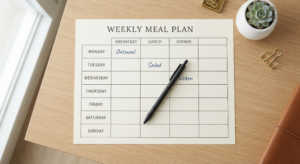
A meal plan only works if it survives real life. Build in one flexible night where either person can suggest something spontaneous, whether that is leftovers, a quick pantry meal, or a planned takeout night. Trying to plan seven perfectly structured dinners a week is where most couples burn out on meal planning within a month.
Illustrative Example
Consider a fictional couple, Maya and Theo, who both work full time and used to default to takeout three nights a week.
They started with a simple change: one shared favorite meal on Sundays, two nights built around ingredient overlap using a shared protein, one planned leftover night, and one flexible night.
Within a few weeks, their grocery bill dropped and their weeknight stress dropped along with it, mostly because the plan matched how they actually lived rather than an idealized version of home cooking.
Complete 7 Day Meal Plan for a Couple
Monday Breakfast: Greek yogurt with berries and granola Lunch: Leftover grain bowls from the fridge Dinner: Sheet pan chicken thighs with roasted vegetables (cook extra chicken for later in the week)
Tuesday Breakfast: Scrambled eggs with spinach Lunch: Turkey and cheese sandwiches Dinner: Stir fry using the same vegetables from Monday, plus rice
Wednesday Breakfast: Overnight oats Lunch: Salad topped with leftover chicken from Monday Dinner: Pasta with a simple tomato and vegetable sauce
Thursday Breakfast: Toast with peanut butter and banana Lunch: Leftover pasta Dinner: Tacos with two filling options, one meat based and one vegetarian, using the same shells and toppings bar
Friday Breakfast: Smoothies Lunch: Taco leftovers turned into a quick wrap Dinner: Flexible night, order in or cook something simple like grilled cheese and soup
Saturday Breakfast: Pancakes or a slower cooked breakfast Lunch: Big salad with whatever produce is left in the fridge Dinner: Shared favorite meal, something you both genuinely look forward to each week
Sunday Breakfast: Eggs and toast Lunch: Leftovers or a light meal Dinner: A batch cooked meal like chili or soup, made in a larger portion to carry into Monday’s lunch
Note: any prices you see referenced online for these ingredients are examples only. Actual grocery costs vary significantly by location, store, season, and current date, so use these as planning guides rather than fixed budgets.
Conclusion
A weekly meal plan for a couple does not need to be complicated to work. What tends to work best is building a plan around real preferences, overlapping ingredients to cut down on both cost and waste, and leaving room for at least one flexible night.
Once the structure is in place, grocery shopping gets faster, weeknight decisions get easier, and you spend less time wondering what to cook and more time actually enjoying the meal together.
Frequently Asked Questions
How much food should a weekly meal plan for a couple include?
Most couples do well planning three main meals a day with one or two flexible slots for leftovers or takeout, rather than planning every single meal from scratch.
How do I meal plan when we have different food preferences?
Build meals around a shared base ingredient with customizable toppings or sides, so each person can adjust the meal to their own taste without requiring two separate dishes.
How many meals should I batch cook for two people?
One or two batch cooked meals a week is usually enough for a couple, since larger batches naturally stretch into a second meal or lunch the next day.
Do I need a big grocery budget to meal plan for two?
Not necessarily. Planning around ingredient overlap and checking what you already have before shopping tends to reduce cost more than any specific budget target.
How do I stop wasting food when cooking for just two people?
Plan intentional leftovers, buy produce in amounts you can realistically use within the week, and reuse shared ingredients across multiple meals rather than buying separate items for every recipe.
Is meal planning for a couple different from meal planning for one person?
Yes. A couple needs to balance two appetites and two preferences, while planning for one person only requires accounting for a single set of tastes and portion needs.
What is the easiest way to start a weekly meal plan as a couple?
Start with one shared favorite meal, then build two or three additional dinners around ingredients you already plan to buy for that meal.