
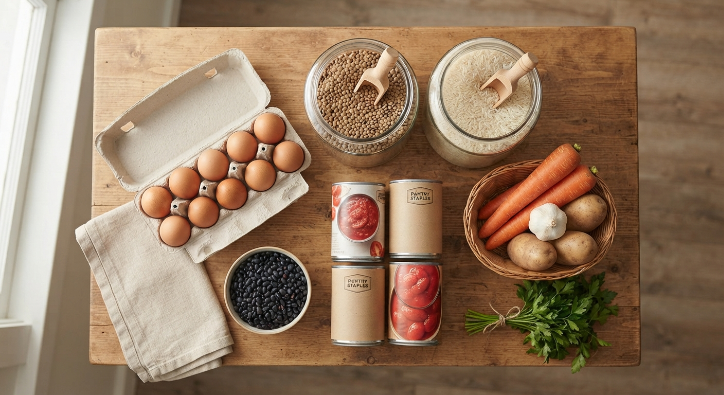
Budget meal planning works best when it starts at the ingredient level, not the recipe level. Most people flip that order: they pick recipes first, then get surprised by the total at checkout.
Building your week around a small set of affordable, versatile ingredients almost always brings the grocery bill down further than hunting for coupons ever will.
What I have found works best with clients who are trying to lower their food spending is shifting the question from “what do I want to eat” to “what is actually a good value this week.” Those two questions can lead to very different, and very differently priced, weeks of meals.
Start With Your Cost Anchors, Not Your Recipes
Every affordable weekly menu benefits from two or three cost anchors: inexpensive proteins (eggs, canned beans, chicken thighs, lentils) and versatile carbohydrates (rice, pasta, potatoes) that show up across multiple meals in different forms.
Once you have chosen your anchors for the week, recipes become a matter of seasoning and technique rather than a new grocery run every time.
This is one of the core ideas behind the USDA’s own budget guidance. The USDA’s Healthy Eating on a Budget resources are built around helping households plan meals, shop smarter, and prepare food that stretches further, including sample two week menus designed around a set calorie level so families can apply the guidance without guessing at portions.
Shop the Sales, Then Plan Around Them
Instead of planning first and shopping second, budget conscious planners often flip the sequence: check the weekly sales flyer or app for what proteins and produce are discounted, then build the week’s meals around those items. This single habit change tends to save more than switching brands or clipping coupons for items you were not already buying.
Use Unit Pricing to Compare Real Value
The price tag on the shelf is not always the full story. Comparing cost per ounce or per serving, rather than cost per package, often reveals that a larger size or a store brand is genuinely cheaper, even when the sticker price looks higher at first glance. This is a small habit that compounds significantly over a year of weekly shopping.
Cook Once, Eat It Twice (Or Three Times)
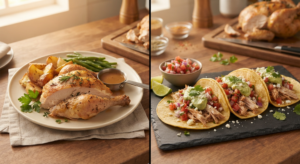
One approach I often recommend for budget meal planning is designing dinners that intentionally produce extra, then planning a second meal around the leftovers rather than treating leftovers as an afterthought. Roasted chicken becomes chicken tacos two nights later.
A pot of rice becomes fried rice. This is different from generic meal prepping; it is planning the second meal at the same time as the first, so nothing sits in the fridge without a purpose. Also read Meal Planning for Beginners: A Simple Way to Start (Without Overhauling Your Life).
Watch for Hidden Waste
Food that gets thrown away is money that gets thrown away, regardless of how cheap it was at checkout. Budget meal planning includes planning portion sizes realistically and using a “first in, first out” habit with produce, so vegetables bought early in the week get used before they spoil.
Real Life Example: The USDA’s SNAP Ed Approach to Budget Menus
Rather than relying on generic tips, the USDA’s Center for Nutrition Policy and Promotion built its budget eating guidance around real sample menus.
According to USDA’s announcement of its Healthy Eating on a Budget program, the initiative includes a full cookbook of recipes from the SNAP Ed Nutrition Connection, presented as sample two week menus based on a set calorie level, along with grocery and pantry lists so households can plan purchases around those menus rather than shopping meal by meal.
That structure, planning several meals at once around a shared list of ingredients rather than one recipe at a time, is the same principle that tends to lower grocery bills for any household, not only those using assistance programs. It is a useful case study in what budget meal planning looks like when it is designed deliberately rather than improvised.
Common Budget Planning Mistakes
A few patterns show up again and again in households trying to cut grocery costs. Buying specialty ingredients for a single recipe that then sit unused. Skipping a grocery list and shopping from memory, which tends to lead to overbuying.
Treating “on sale” as automatically worth buying, even for items your household does not regularly eat. Avoiding these three habits alone often has more impact than any single frugal recipe.
Conclusion
Budget meal planning is not about eating less or eating worse. It is about sequencing your decisions differently: choosing affordable anchor ingredients first, shopping around what is actually discounted, and designing meals that intentionally stretch into a second dinner.
Try planning just one week around your pantry and the current sales flyer, and compare the total to your usual grocery bill. The difference tends to be more noticeable than most people expect.
Frequently Asked Questions
What is the cheapest way to plan meals for a family?
Build the week around a small number of inexpensive proteins and carbohydrates, then rotate seasoning and vegetables to create variety without buying new base ingredients each time.
Does budget meal planning mean eating less healthy food?
Not necessarily. Beans, eggs, frozen vegetables, and whole grains are both affordable and nutrient dense, which is part of why they are commonly recommended as budget staples.
How often should I check grocery store sales before planning meals?
Checking once a week, right before you plan your menu, is usually enough to notice meaningful discounts on proteins and produce.
Is buying in bulk always cheaper?
Only if you will actually use the full amount before it spoils or expires. Compare unit price and realistically assess your household’s consumption before buying larger sizes.
How can I reduce food waste while budget meal planning?
Plan portions based on how many people you are actually feeding, use a first in first out approach with perishables, and plan a specific second use for likely leftovers.
Are frozen vegetables a good budget option?
Yes. Frozen produce is typically picked and frozen at peak ripeness, holds nutrients well, and often costs less than fresh, especially out of season.
How do I build a budget meal plan if I do not like eating the same thing repeatedly?
Keep your protein and carbohydrate anchors consistent, but vary the sauce, spice blend, or cuisine style each time to create the feeling of variety without increasing cost.