
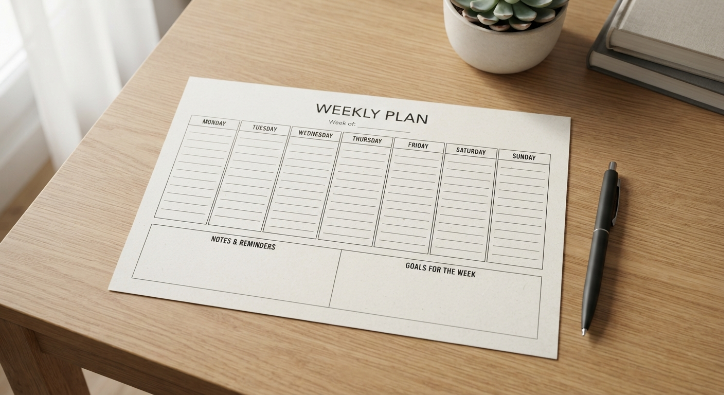
A blank calendar and seven empty dinner slots can feel more intimidating than helpful. Most people who ask how to make a weekly meal plan from scratch already know meal planning exists as a concept.
What they actually need is the order of operations: what to decide first, what to decide second, and how those decisions eventually turn into a finished plan and a grocery list. That is what this framework covers.
Start By Checking Your Schedule
Before choosing a single meal, look at your actual week. Note which nights are busy, which nights involve being home early, and which nights you might not cook at all.
This step alone prevents the most common planning failure: assigning an ambitious recipe to a night you will not have time for it.
Check What Food You Already Have
Open the fridge, freezer, and pantry and take honest stock. This is not a formality.
It directly shapes which meals you choose, since using what you already have reduces both your grocery bill and the amount of food that eventually gets thrown out.
Choose Meals According to Your Actual Week
Match meals to the schedule you just reviewed. Busy nights get meals that take fifteen to twenty minutes or rely on something already prepped. Slower nights can handle a recipe with more steps.
This is the point where many generic planning guides fall short, because they suggest meals in isolation without connecting them back to your calendar.
Balance Convenience and Variety

A week of entirely new, complicated recipes is exhausting. A week of the exact same three meals gets boring fast. Aim for a mix: two or three meals you already know well, one or two you have made before but do not repeat constantly, and at most one new recipe you want to try.
Build the Grocery List From the Meals, Not the Other Way Around
Once your meals are chosen, build the list directly from those recipes, cross referencing what you already confirmed you have on hand. Also read Meal Planning for One Person on a Budget: A Realistic Weekly System.
This keeps the list focused and prevents the common trap of shopping first and figuring out meals later, which tends to produce mismatched ingredients and higher spending.
Assign Meals to Specific Days
With your list built, lock each meal into a specific day based on the schedule check from step one. This turns a loose collection of recipes into an actual plan you can follow without renegotiating decisions every evening.
Plan for Leftovers on Purpose
Decide in advance which meals will produce extra servings and where those servings will go, whether that is tomorrow’s lunch or a night off from cooking later in the week. Planning leftovers intentionally, rather than hoping they get used, is one of the more overlooked steps in a genuinely complete weekly system.
Prepare What You Can Ahead of Time
Chopping vegetables, cooking a grain in bulk, or marinating protein a day or two ahead of time reduces the daily burden of cooking.
You do not need to prep the entire week at once. Even ten minutes of prep the night before a busy day makes a noticeable difference.
Review the Plan Before Shopping
Read through the full week one more time before you shop. Check that the meals actually fit the days you assigned them to, that the grocery list matches what the recipes require, and that you have not accidentally planned two dishes that need the same piece of equipment on the same night.
A Full Example: From Blank Week to Complete Plan
Start with the schedule: Monday and Wednesday are late work nights, Tuesday and Thursday are normal, Friday is flexible, and the weekend is open. The pantry check shows leftover rice, half a bag of spinach, and a few eggs that need to be used soon.
Monday becomes a fast stir fry using the spinach and rice already on hand. Tuesday becomes baked salmon with roasted vegetables, since there is more time to cook.
Wednesday reuses Tuesday’s extra vegetables in a grain bowl, keeping the second late night low effort. Thursday is a new recipe, a sheet pan fajita bake, chosen because there is enough time that evening to handle something less familiar.
Friday uses the eggs in a simple frittata with whatever vegetables remain. The weekend stays open for a slightly more involved meal or eating out.
The grocery list is then built directly from salmon, vegetables, fajita ingredients, and a few pantry top ups, skipping anything already confirmed in the fridge.
Real World Example: Building a Weekly Plan the Practical Way
Michigan State University Extension has published guidance that frames weekly meal planning as a flexible process rather than a fixed checklist, noting that there is no single correct order for creating a meal schedule, choosing meals, taking inventory, and building a shopping list, and that the right order is whatever consistently works for the person doing it.
That framing matches what tends to happen in practice: a system built from scratch around your own schedule holds up far better than one copied exactly from someone else’s routine.
Why This System Works Better Than Starting With Recipes
Many people default to browsing recipes first and building a week around whatever looks appealing. The problem is that this approach ignores your schedule and your pantry, both of which determine whether a plan is actually realistic.
Starting with your week and your kitchen, then choosing meals to fit, produces a plan far more likely to survive contact with an actual Tuesday.
When This Framework Might Need Adjusting
If your schedule changes often, keep two or three backup meals in mind that require minimal planning, so a sudden late night does not derail the whole week.
If you cook for multiple people with different preferences, build in one night that is intentionally flexible rather than trying to force every meal to satisfy everyone equally.
Conclusion
Learning how to make a weekly meal plan from scratch comes down to sequencing: schedule first, pantry second, meals third, list fourth, days assigned last.
Followed in that order, a blank week stops feeling intimidating and becomes something you can build in twenty minutes with a notepad or a simple planning app.
FAQs
Where do I start when building a meal plan from scratch?
Start with your weekly schedule, not with recipes. Knowing which nights are busy shapes every decision that follows.
Should I choose recipes before or after checking my pantry?
Check your pantry first. It prevents duplicate purchases and helps you choose meals that use what you already have.
How many new recipes should I try in one week?
One is usually enough. Building a week around mostly familiar meals with a single new recipe keeps the process sustainable.
What order should I build my grocery list in?
Build it after your meals are chosen, based directly on what those meals require, rather than shopping first and planning later.
How far ahead should I prep ingredients?
A day or two ahead is usually enough. Prepping an entire week at once is not necessary and often does not stay fresh.
What if my schedule changes during the week?
Keep one or two simple backup meals in mind that require minimal planning, so an unexpected change does not derail the whole plan.
Is there one correct order for building a weekly meal plan?
Not exactly. The steps matter more than the exact sequence, and many people adjust the order slightly to fit their own routine.