
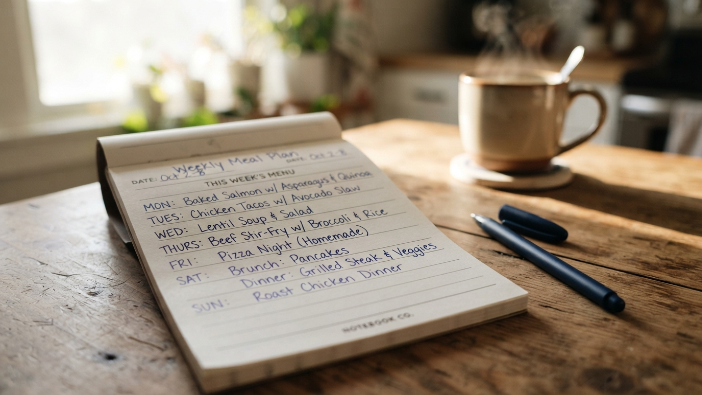
You have a meal plan written out for the week, but somehow the grocery store trip still turns into a guessing game. You forget the garlic you already listed twice. You grab a second jar of peanut butter because you could not remember if you had one at home.
This is the exact gap between having a meal plan and knowing how to turn a meal plan into a grocery list that actually works at the store.
The two tasks feel similar, but they are not the same skill. A meal plan tells you what you are cooking. A grocery list tells you what to buy, in what amount, and in what order you will move through the store.
The MyPlate guidance on planning meals and shopping smart makes a similar point, noting that a clear plan before shopping is one of the most reliable ways households keep both spending and food waste under control.
Skipping the translation step is where most people lose time, money, and patience. What follows is the exact process I use to move from a written meal plan to a finished, shoppable list in under fifteen minutes.
Step 1: Review the Complete Meal Plan Before You List Anything
Before writing a single item, read through every planned meal for the week. Breakfast, lunch, dinner, and snacks if you plan those too. This step matters because ingredients often repeat across meals, and you want to notice that pattern before you start writing instead of after.
In my experience, people who skip this review step end up with a messy list full of near duplicates, like onion and yellow onion listed separately because they were added at different times.
Step 2: List Every Required Ingredient From Each Recipe
Go recipe by recipe and write down every ingredient, including small ones like garlic, cooking oil, or spices. It is tempting to assume you already have the basics, but that assumption is exactly what leads to a rushed second trip to the store midweek.
At this stage, do not worry about quantities yet. The goal is simply capturing everything the week requires, meal by meal, so nothing gets left out later.
Step 3: Combine Duplicate Ingredients Into One Line

This is the step that actually creates a real grocery list instead of a stack of recipe ingredient lists. Scan your full list and combine anything that repeats. If three recipes call for onions, that becomes one line with a combined quantity, not three separate entries.
One approach I find particularly useful is grouping by ingredient name first, then adding up the amounts once everything is grouped together. It is much easier to spot duplicates when similar items sit next to each other on the page. Also read Cheap Meal Plan for Two People a Week (7 Day Plan and Grocery List).
Step 4: Check the Pantry and Refrigerator First
Before finalizing anything, physically check what you already have. Open the pantry, the fridge, and the freezer, and cross off anything you already own in a usable quantity.
The FoodKeeper storage guidance from the United States Department of Agriculture explains typical storage timelines for common pantry and refrigerator items, which makes it easier to confirm what is still good to use before it loses quality, meaning fewer unnecessary repurchases at the store.
This step alone can meaningfully shrink your final list and reduce your grocery bill.
Step 5: Calculate Realistic Quantities
Now go back through your combined list and estimate real amounts based on how many servings you are actually cooking.
If a recipe calls for one bell pepper but you are doubling the meal, that becomes two. If you are cooking for one person instead of a family recipe’s four servings, the amount usually needs to shrink, not stay the same.
Rounding to how items are actually sold helps too. If a recipe needs half an onion, your list should still say one onion, because that is what you will be purchasing.
Step 6: Separate Fresh Items From Shelf Stable Foods
Split your list into two general groups: perishable items like produce, dairy, and meat, and shelf stable items like canned goods, grains, and dry pantry staples. This separation makes it much easier to plan when you will actually use each item during the week, and it helps you avoid overbuying fresh produce that will spoil before you get to it.
Step 7: Organize the List by Grocery Store Category
Once quantities are set, reorganize the entire list by category: produce, proteins, dairy, grains and pantry, frozen, and household items if needed. Shopping by category, in the order your store is laid out, is what actually saves time at checkout. Random order lists cause backtracking and missed items.
Step 8: Plan for Leftovers Within the List
If your meal plan intentionally includes leftover nights, do not accidentally double the ingredients for that meal. Note directly on your plan which nights are leftover nights so your grocery list reflects real cooking days, not every day of the week.
Step 9: Build the Final Shopping Checklist
Combine everything into one clean, categorized checklist. This is the version you actually bring to the store, either on paper or in a notes app. Keep it simple enough to check off quickly while you shop.
Step 10: Review the List One Last Time Before Shopping
Read through the finished list once more against your original meal plan. Confirm nothing was missed, no ingredient appears twice under different names, and quantities still make sense for how many people you are feeding.
Meal Plan to Grocery List Example
Say your weekly dinners are:
Monday: Chicken stir fry with rice Tuesday: Turkey chili Wednesday: Leftover turkey chili Thursday: Baked salmon with roasted vegetables Friday: Pasta with tomato sauce
After reviewing all five meals, the combined and organized grocery list looks like this:
Produce: bell peppers, broccoli, onions (three needed across meals), garlic, carrots Proteins: chicken breast, ground turkey, salmon fillets Grains and pantry: rice, pasta, canned tomatoes, chili beans, olive oil Dairy: parmesan cheese Frozen: mixed vegetables if fresh broccoli was not on sale
Notice that onions and garlic appear once each on the final list, combined from three separate recipes, and Wednesday requires no new grocery items at all since it reuses Tuesday’s chili.
Reusable Grocery List Template
Copy this simple structure for any week:
Produce: Proteins: Dairy and eggs: Grains and pantry staples: Frozen: Household or other:
Under each category, list item and quantity together, such as onions, three, or chicken breast, two pounds. Keep the template in a notes app or printed sheet so it is ready every time you sit down to plan.
Illustrative Example
Consider a household planning five dinners for two people. Before checking the pantry, their draft list had eighteen items.
After the pantry and refrigerator check described in step four, six items were crossed off because they were already on hand, including rice, canned tomatoes, and olive oil.
The final shopping trip covered twelve items instead of eighteen, at a noticeably lower total cost. This is a representative illustration of how the process works in practice, not a documented case study.
Conclusion
Learning how to turn a meal plan into a grocery list is really about building one repeatable habit: review, consolidate, check what you already own, then organize by category.
Once this becomes routine, grocery trips get faster, food waste drops, and the constant feeling of forgetting something at the store mostly disappears. Start with the template above on your next planning day and adjust it until it fits how your household actually shops.
Frequently Asked Questions
How do I turn a meal plan into a grocery list quickly?
Review all planned meals first, list every ingredient, combine duplicates, check your pantry, then organize the final list by grocery store category. Doing these steps in order is what keeps the process fast.
Should I check my pantry before or after writing the grocery list?
Check your pantry after you have combined duplicate ingredients but before finalizing quantities. This way you are crossing items off a complete list rather than trying to remember everything from memory while planning.
What is the best way to organize a grocery list from a meal plan?
Group items by store category, such as produce, proteins, dairy, and pantry staples, in the order your store is arranged. This reduces backtracking and speeds up checkout.
How do I avoid buying duplicate ingredients when converting a meal plan?
Combine ingredients by name before finalizing quantities. If three recipes call for garlic, write one combined line rather than three separate ones.
Can this process work for a meal plan that includes leftovers?
Yes. Mark which nights use leftovers directly on your meal plan so the grocery list only reflects the meals you are actually cooking fresh, not every single day.
Do I need a special app to turn a meal plan into a grocery list?
No. A simple template with categories, either on paper or in a basic notes app, works well. The process matters more than the tool.
How far in advance should I turn my meal plan into a grocery list?
Most households do this the day before or the morning of their shopping trip, once the full week’s meals are settled and unlikely to change.