
Introduction
Cooking a week of meals on a Sunday afternoon does not automatically make that food safe to eat by Thursday. That gap, between doing the work and actually protecting the food, is exactly what a good storage guide needs to close.
The 5 rules in every safe meal prep storage guide come down to timing, temperature, separation, labeling, and reheating, and once you understand why each one matters, you stop guessing and start making decisions with confidence.
This is not about container brands or organizing your fridge shelves for looks. It is about the handful of habits that actually determine whether your prepped food is still safe to eat.
Rule One: Cool Food Before It Sits in the Refrigerator
The biggest mistake in home meal prep happens right after cooking, not days later. Hot food placed straight into a deep container and shoved into a crowded fridge cools far too slowly, and that slow cooling gives bacteria a comfortable window to multiply.
According to the USDA Food Safety and Inspection Service, cooked food should go into the refrigerator within two hours of cooking, or within one hour if the room is warmer than 90°F.
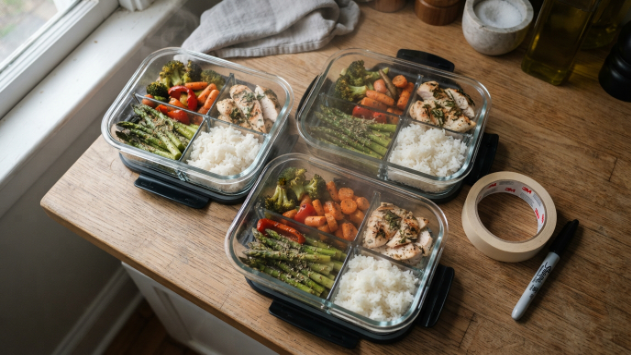
In practice, this means dividing large batches into shallow containers rather than one big pot, since shallow containers cool faster because more surface area is exposed to cold air.
If you cook a big batch of chili or soup on a Sunday, split it into two or three inch deep containers instead of one deep pot. That single habit change has more impact on food safety than any container upgrade.
Rule Two: Understand the Temperature Zones You Are Working With
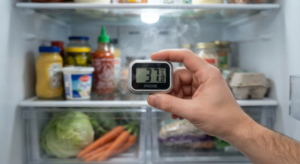
Bacteria grow fastest in what food safety professionals call the danger zone, roughly between 40°F and 140°F. Your refrigerator should sit at or below 40°F, and your freezer at 0°F or below.
This is not a suggestion; it is the baseline that every other rule depends on. If your fridge runs warmer than that, even perfectly cooled and labeled food will not stay safe as long as you think.
A cheap fridge thermometer solves this in about thirty seconds and removes the guesswork entirely. Once you know your actual fridge temperature, everything else in this guide becomes far more reliable.
Rule Three: Keep Raw, Cooked, and Allergen Foods Separated
Cross contamination does not require a dramatic mistake. It usually happens quietly: raw chicken juice dripping onto a container of cooked rice on the shelf below, or a cutting board used for raw meat wiped down instead of properly washed before it touches prepped vegetables.
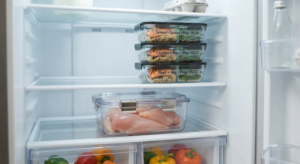
Store raw proteins on the lowest shelf, in a container that cannot leak downward, and keep prepped and ready to eat meals on higher shelves where nothing can drip onto them. Also read Family Meal Planning That Actually Works for Picky Eaters and Busy Schedules.
If you are meal prepping for someone with a food allergy, apply the same logic to allergen containment. A shared prep surface or utensil can carry enough residue to matter, even when the amount looks negligible.
Rule Four: Label Every Container With a Date, and Set a Real Use By Point
Once food is prepped, memory becomes unreliable fast. Labeling with the date it was cooked, not the date you plan to eat it, gives you an honest reference point.
The FoodSafety.gov Cold Food Storage Chart is a useful reference for how long different categories of cooked food remain safe in the refrigerator, and as a general rule, most cooked meals should be eaten or frozen within three to four days.
This is where a lot of well intentioned meal preppers lose track. Five containers that all look similar in a crowded fridge quickly become a guessing game. A strip of masking tape and a marker solves this more reliably than any fancy label system.
Rule Five: Reheat With a Plan, Not a Guess
Reheating is the final safety checkpoint, and it deserves more attention than it usually gets. Food should be reheated to an internal temperature of 165°F, checked with a thermometer rather than judged by how hot it feels.
Microwaves in particular heat unevenly, so stirring partway through and checking multiple spots matters more than most people realize.
If you are reheating a frozen prepped meal, resist the urge to thaw it on the counter overnight. Thawing in the refrigerator, in cold water, or directly during reheating in the microwave or oven keeps the food out of the danger zone for longer stretches of unsupervised time.
Common Storage Mistakes That Undo Good Meal Prep
Even careful home cooks fall into a few repeatable traps. Packing hot food into airtight containers immediately traps steam and slows cooling. Overloading the fridge blocks airflow and creates uneven cold spots.
Trusting smell alone as a safety test is unreliable, since some bacteria that cause illness do not change the smell, taste, or appearance of food at all. And reusing a container without a fresh label leads to eating something several days older than intended.
Real Life Example: The USDA’s “Monday After Thanksgiving” Rule
One of the clearest public examples of this kind of storage rule in action comes from the USDA’s own consumer education campaign around Thanksgiving leftovers.
The USDA’s guidance on leftovers tells households to treat the Monday after Thanksgiving as the last safe day to eat refrigerated leftovers from the holiday meal, using that fixed calendar date as a simple, memorable version of the three to four day rule.
It is a good illustration of how a slightly abstract safety guideline (three to four days) becomes far easier to follow when it is tied to something concrete, like a specific day on the calendar.
The same idea works for weekly meal prep: pick a fixed day, such as “Thursday is my toss or freeze day,” and the rule becomes a habit instead of a calculation.
A Practical Weekly Storage Routine
Set aside ten minutes on your cooking day to portion food into shallow containers, label each one, and place raw items on the bottom shelf.
Midweek, do a thirty second fridge scan to confirm nothing is approaching its use by point. On your designated cutoff day, freeze anything you have not eaten rather than letting it linger past the safe window.
This routine turns the five rules above into something automatic rather than something you have to remember from scratch every week.
Conclusion
The 5 rules in every safe meal prep storage guide are not complicated, but they only work if they become habits rather than occasional reminders.
Cool food quickly, respect your fridge and freezer temperatures, separate what could cross contaminate, label everything honestly, and reheat with a thermometer instead of a guess.
Get those five things right consistently, and the rest of your meal prep system, whatever containers or schedule you use, has a solid safety foundation underneath it.
Frequently Asked Questions
How long can meal prepped food safely stay in the refrigerator?
Most cooked meals stay safe in the refrigerator for three to four days when stored at or below 40°F. After that window, freeze what remains or discard it rather than risk it.
What are the 5 rules in every safe meal prep storage guide?
Cooling food quickly after cooking, respecting proper refrigerator and freezer temperatures, separating raw and cooked items to avoid cross contamination, labeling containers with accurate dates, and reheating to a safe internal temperature.
Is it safe to put hot food directly into the refrigerator?
Yes, as long as it is divided into shallow containers first. Placing a large pot of hot food directly into the fridge slows cooling and can leave the food in the danger zone too long.
What temperature should my refrigerator and freezer be set to for meal prep?
The refrigerator should be at or below 40°F and the freezer at 0°F or below. A basic appliance thermometer is the most reliable way to confirm this.
Can I tell if prepped food has gone bad just by smell?
Not reliably. Some bacteria that cause foodborne illness do not noticeably change how food smells, tastes, or looks, which is why relying on labeled dates matters more than sensory checks alone.
What internal temperature should reheated meal prep reach?
Reheated food should reach an internal temperature of 165°F, verified with a food thermometer rather than estimated.
Should raw meat be stored on the same shelf as prepped meals?
No. Raw proteins should be stored on the bottom shelf in leak proof containers, below any ready to eat prepped meals, to prevent drips from causing cross contamination.