
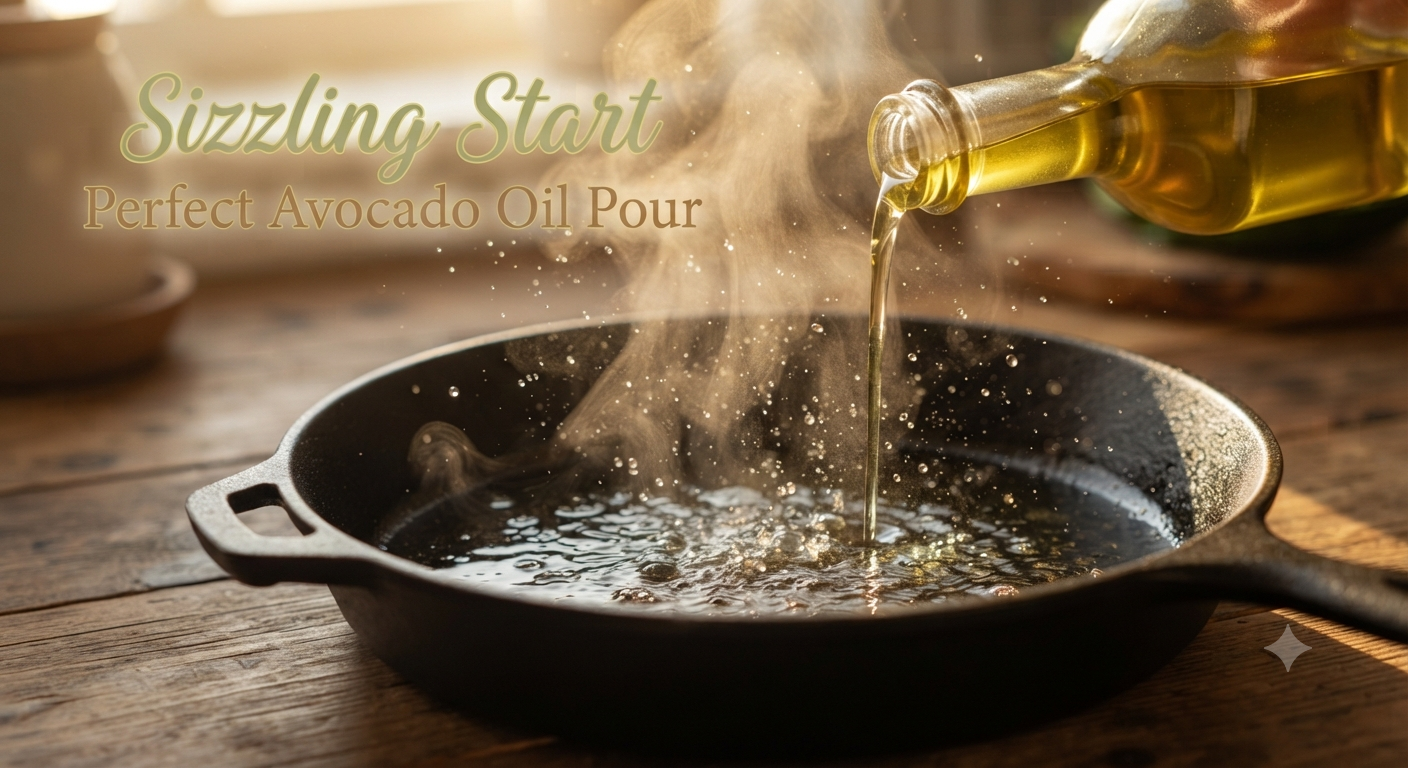
Discover the 5 best oils for high heat cooking. Learn the science of smoke points and protect your health with the right cooking oils today.
Table of Contents
Introduction to High-Heat Cooking
The Science of Smoke Points
Top 5 Best Oils for High Heat Cooking
Conclusion
Why You Love It
We all love achieving that restaurant-quality sear on a steak or getting perfectly roasted, golden-brown vegetables straight from our home oven. However, nothing ruins a peaceful cooking experience faster than billowing clouds of smoke and a bitter, burnt aftertaste. This article bridges the gap between everyday cooking and kitchen science, helping home cooks understand the invisible molecular breakdown of oils. You will love how it empowers you to make informed, healthy choices so your food tastes exceptionally clean and flavorful every single time.
5 Best Oils for High Heat Cooking You Need to Know
If your kitchen fills with smoke every time you sear a steak or toss vegetables, your cooking oil might be working against you. When looking for the best oils for high heat cooking, every culinary expert and scientist knows that every oil has a breaking point known as its smoke point. When you cross that line, beneficial compounds vanish, harmful free radicals form, and your food takes on a bitter taste.
The Science of Smoke Points
As someone who loves food science, I always look at cooking through the lens of molecular stability. Refined vs. unrefined oils behave completely differently under thermal stress. Unrefined oils retain natural plant compounds that burn quickly, whereas stable, high-smoke-point options endure intense heat without degrading.
Top 5 Best Oils for High Heat Cooking
Here are the top choices to keep your kitchen running smoothly:
Avocado Oil: Boasting a smoke point of around 270°C (520°F), it’s the ultimate gold standard for high temperature searing and roasting.
Light Olive Oil: Unlike extra virgin olive oil, the light variant undergoes safe filtration that raises its heat threshold.
Ghee (Clarified Butter): Free of milk solids, ghee handles high temperatures gracefully while adding a rich, nutty depth.
Canola Oil: A budget-friendly option with a neutral flavor profile and a high smoke point around 204°C (400°F).
Safflower Oil: Highly refined safflower oil can handle temperatures up to 265°C (510°F) without breaking down.
For more insights on safe cooking practices, you can check out Healthline’s Guide on Cooking Oils. You can also explore our Brunch Fusion Homepage for more tips.
The Chemistry of the Perfect Sizzle: Why High Heat Cooking is Ruining Your Oils
What is a smoke point in cooking oils?
The smoke point is the precise temperature at which a cooking oil breaks down, loses its beneficial compounds, releases free radicals, and starts producing smoke and a bitter taste.
Why is avocado oil considered one of the best for high heat?
Avocado oil boasts a very high smoke point of around 270°C (520°F), making it exceptionally stable for high-temperature searing and roasting without degrading.
Can I use extra virgin olive oil for deep frying or high heat searing?
No, extra virgin olive oil has a lower smoke point and contains unrefined plant compounds that burn quickly under intense heat; light olive oil or avocado oil is much better suited.
Does ghee handle high temperatures well?
Yes, ghee (clarified butter) is free of milk solids, allowing it to handle high temperatures gracefully while adding a rich, nutty flavor profile to dishes.
How do refined and unrefined oils differ under thermal stress?
Unrefined oils burn quickly because they retain natural plant compounds, whereas refined oils undergo filtration that increases their molecular stability and heat threshold.
Pros
Health Protection: Prevents the formation of harmful free radicals caused by overheating fragile unrefined oils.
Flavor Integrity: Eliminates bitter, burnt flavors, allowing the true taste of your food to shine through.
Educational Clarity: Breaks down complex chemistry concepts into practical, easy-to-understand kitchen rules.
Practical Recommendations: Provides clear alternatives like avocado oil and ghee for high-temperature cooking methods.
Cons
Cost Factor: High heat stable oils like 100% pure avocado oil can sometimes be more expensive than standard vegetable oils.
Limited Familiarity: Some home cooks are accustomed to using extra virgin olive oil for everything and may struggle to switch habits.
Refining Misconceptions: Requires understanding the difference between refined and unrefined variants, which can initially confuse beginners.
Conclusion
Matching your oil to your cooking method protects both your health and your flavor profile. Next time you turn up the burner, choose an oil built to handle the heat.