
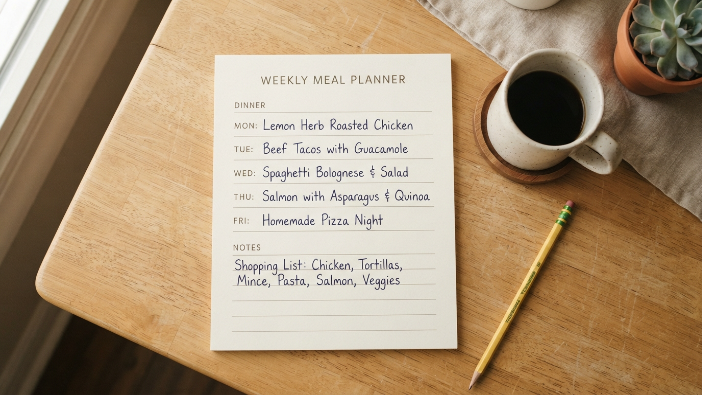
Most people quit meal planning within the first two weeks, not because the idea is flawed, but because they try to plan every meal for every day right out of the gate.
If you are looking at meal planning for beginners and feeling a little overwhelmed already, that reaction makes sense. The goal here is not a perfect system. It is a plan you will actually still be using a month from now.
In my experience with practical meal planning, the people who stick with it are the ones who start small on purpose. They plan four dinners instead of seven. They leave room for leftovers and takeout.
They treat the first few weeks as a trial run, not a final system. That mindset shift matters more than any app, spreadsheet, or printable template.
Why Meal Planning Feels Harder Than It Should
Part of the problem is that most advice assumes you already know how to cook, how long groceries last, and how much your household actually eats.
As a beginner, you are learning three skills at once: what to cook, how to shop for it, and how to fit it into your week. Trying to master all three simultaneously is what causes burnout, not any personal failure on your part.
A more realistic starting point is to separate those skills. Spend the first week just noticing what you already eat and buy. Spend the second week building a very short list of meals you know you can cook without a recipe. Only in week three do you start layering in variety and new dishes.
Step One: Take Stock Before You Plan
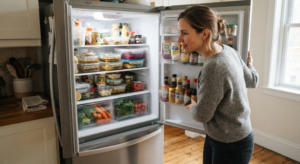
Before writing a single meal on a calendar, open your fridge, freezer, and pantry. Note what you already have, what is close to expiring, and what keeps showing up unused. This single habit prevents one of the most common beginner mistakes: buying groceries for a plan while ignoring food that is already sitting in the kitchen.
The Academy of Nutrition and Dietetics recommends approaching meal planning as a short series of manageable steps rather than one big overhaul, starting with an honest look at your schedule and what you already have on hand before building a shopping list around it, as outlined in its guide to successful meal planning.
Step Two: Build a Short, Repeatable Meal List
You do not need thirty recipes. You need five or six meals you can make with your eyes half closed, plus one or two you are willing to try each week. Write these down somewhere permanent, whether that is a notes app, a printed sheet on the fridge, or a simple spreadsheet. This becomes your safety net on nights when planning feels like too much.
One approach I often recommend to people just starting out is what I call the anchor and rotate method. Pick three anchor meals you already know well (a stir fry, a sheet pan dinner, a big salad with protein) and rotate one new recipe in each week. This keeps grocery shopping predictable while still letting your cooking skills grow.
Step Three: Shop With a List, Not a Vibe
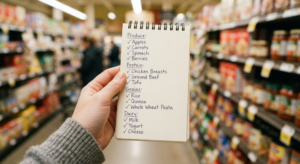
Once you know what you are cooking, build your grocery list by department: produce, proteins, grains, dairy, pantry. Shopping this way cuts down on backtracking through the store and reduces impulse purchases that quietly derail a beginner budget. It also makes it far easier to spot when you are duplicating something you already own.
Step Four: Expect a Few Weeks That Do Not Go As Planned
What I have found works best is telling new planners upfront that the first few weeks will be imperfect. You will overbuy one week and underbuy the next. A recipe will take twice as long as expected. None of that means meal planning does not work for you. It means you are calibrating a system to your actual life, which takes a few real world attempts, not a single perfect plan.
Real Life Example: How the Academy of Nutrition and Dietetics Frames a Beginner Plan
Registered dietitians who work with people new to meal planning consistently point to the same starting sequence: think about your schedule and cooking comfort level first, choose recipes that match that reality, and only then build the shopping list.
According to the Academy of Nutrition and Dietetics’ three step meal planning framework, successful planners check in with their own schedule and skill level before committing to a full week of recipes, which is exactly the sequence that tends to prevent early burnout in people who are brand new to the process.
This lines up with what most beginners actually experience. The plan fails not because the recipes were bad, but because the plan was built around an idealized week instead of the real one.
Conclusion
Meal planning for beginners does not have to mean color coded calendars or a pantry full of matching containers.
It means picking a handful of meals you can actually make, shopping with intention instead of guesswork, and giving yourself permission to adjust the plan as you learn what fits your week. Start with four dinners this week. See how it feels. Build from there.
Frequently Asked Questions
How many meals should a beginner plan for each week?
Start with four or five dinners rather than a full seven day plan. This leaves room for leftovers, eating out, or an off night without derailing the whole week.
Do I need a meal planning app to get started?
No. A notes app, a printed template, or a sheet of paper on the fridge works just as well when you are starting out. Apps can help later once you know what features you actually use.
What is the biggest mistake beginners make with meal planning?
Planning meals without first checking what food is already in the house, which leads to duplicate purchases and food going to waste.
How long does it take to get comfortable with meal planning?
Most people need three to six weeks of consistent practice before a routine starts to feel automatic rather than effortful.
Should I meal plan for breakfast and lunch too, or just dinner?
Start with dinner only. Once that feels manageable, add one other meal, such as lunch, rather than tackling all three at once.
What if I do not like any of the meals I planned by midweek?
Keep a short backup list of no recipe meals (eggs and toast, pasta with jarred sauce) so you have a fallback that does not require improvising from scratch.
Is meal planning worth it if I only cook for myself?
Yes. Solo cooks often benefit even more, since planning helps avoid buying ingredients in quantities that go unused before they spoil.