
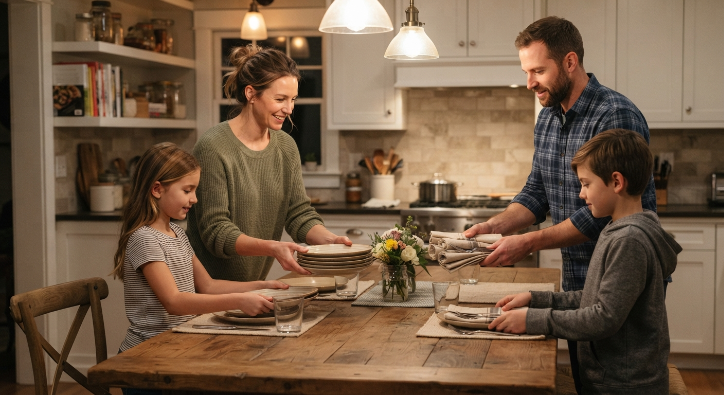
Family meal planning breaks down for a different reason than solo meal planning does. It is rarely about finding recipes.
It is about finding recipes that work across different ages, different appetites, and often at least one genuinely picky eater, all while fitting around practice schedules, homework, and whatever else the week throws at you.
In my experience with practical meal planning for households with kids, the plans that survive contact with a real week are the ones built around a shared structure rather than a fixed menu.
Instead of deciding Tuesday is spaghetti, the more resilient approach is deciding Tuesday is a pasta night, then filling in the specifics closer to the day based on what is actually happening.
Build a Rotation, Not a Rigid Menu
A weekly rotation assigns a category to each night (pasta night, sheet pan night, breakfast for dinner, soup or stew, build your own bowls) rather than a single fixed recipe.
This gives structure to grocery shopping while leaving room to adjust based on who is home, what is on sale, or what needs to be used up in the fridge. Families who use this looser structure tend to report less mental fatigue around dinner decisions than those trying to lock in seven specific recipes weeks in advance.
Involve Kids in the Planning, Not Just the Eating
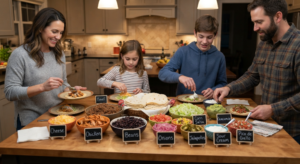
One approach I often recommend is giving kids limited, structured choices within the plan rather than open ended input.
Asking “should Tuesday be tacos or a stir fry” works better than “what do you want for dinner this week,” because it keeps the decision inside options that already fit your rotation and grocery list.
Plan for the Picky Eater Without Building a Second Menu
Cooking a separate meal for a picky eater every night is exhausting and usually unsustainable. A more workable middle ground is building meals with separable components: protein, starch, and vegetable served in a way that lets each person combine them differently.
A taco night, a grain bowl, or a sheet pan dinner with pieces kept slightly separate all allow a picky eater to eat safe foods from the same meal everyone else is having, without a second pot on the stove. Also read Budget Meal Planning: How to Eat Well Without Overspending Each Week.
Keep One or Two Nights Flexible on Purpose
Building in a genuinely unplanned night, leftovers, breakfast for dinner, or a very simple fallback meal reduces the pressure on the rest of the week. Family schedules change constantly, and a plan with zero flexibility tends to fall apart at the first missed practice pickup or late meeting.
Why the Effort Is Worth It Beyond the Dinner Itself
Family meal planning is not only about logistics. Research consistently links regular shared family meals to broader benefits for both kids and parents.
According to Utah State University Extension’s review of research on shared family meals, children and adolescents who eat with their family regularly tend to have higher diet quality and stronger family bonds, including eating more fruits, vegetables, and key nutrients, along with associations to better academic performance and mental wellbeing.
That is not a reason to feel guilty about a busy week where dinner together does not happen every night. It is a reasonable case for why the planning effort tends to pay off in more than just a smoother Tuesday evening.
Real Life Example: What the Research Says About Frequency, Not Perfection

A frequently cited study published in the Journal of Human Nutrition and Dietetics looked specifically at preschool age children and found that those who ate more frequent family meals also consumed more fruits and vegetables, a pattern summarized in the Family Meals Movement’s review of supporting research.
The researchers noted that even modest increases in shared meal frequency were associated with measurable differences in what young children actually ate.
The practical takeaway for family meal planning is not that every dinner needs to be elaborate or that every family member needs to sit down together every single night. It is that consistency, even a few more shared meals a week than before, appears to matter more than any individual recipe.
Conclusion
Family meal planning works best as a flexible structure rather than a fixed, unbending schedule. Build a rotation your household can rely on, give picky eaters a way to participate in a shared meal instead of a separate one, and leave at least one night open for whatever the week actually looks like.
The goal is not a perfect week of dinners. It is a repeatable system your family can lean on, week after week, without starting from scratch every Sunday.
Frequently Asked Questions
How do I meal plan for a family with different food preferences?
Build meals with separable components (protein, starch, vegetable) so each person can combine them to their own taste without you cooking multiple separate meals.
How many meals should I plan for a busy family each week?
Plan four or five specific dinners and leave one or two nights as flexible leftovers or a simple fallback meal to absorb schedule changes.
What is a good way to involve picky eaters in family meal planning?
Offer structured choices between two planned options rather than open ended input, so their preference still fits within your existing grocery list.
Does eating together as a family really make a nutritional difference?
Research has associated more frequent family meals with higher intake of fruits and vegetables and better overall diet quality in children, though individual results vary by household.
How far in advance should family meal planning happen?
Weekly planning tends to work best for most households, ideally done around the same time each week so it becomes a routine rather than an extra task.
What if our schedule is too unpredictable for a fixed weekly plan?
Use a rotation of meal categories instead of specific nights and recipes, and keep a short list of ten minute fallback meals for last minute schedule changes.
Should teenagers be involved in family meal planning too?
Yes, giving older kids a role, such as picking one dinner a week or helping with the grocery list, tends to increase buy in and reduce mealtime resistance.