
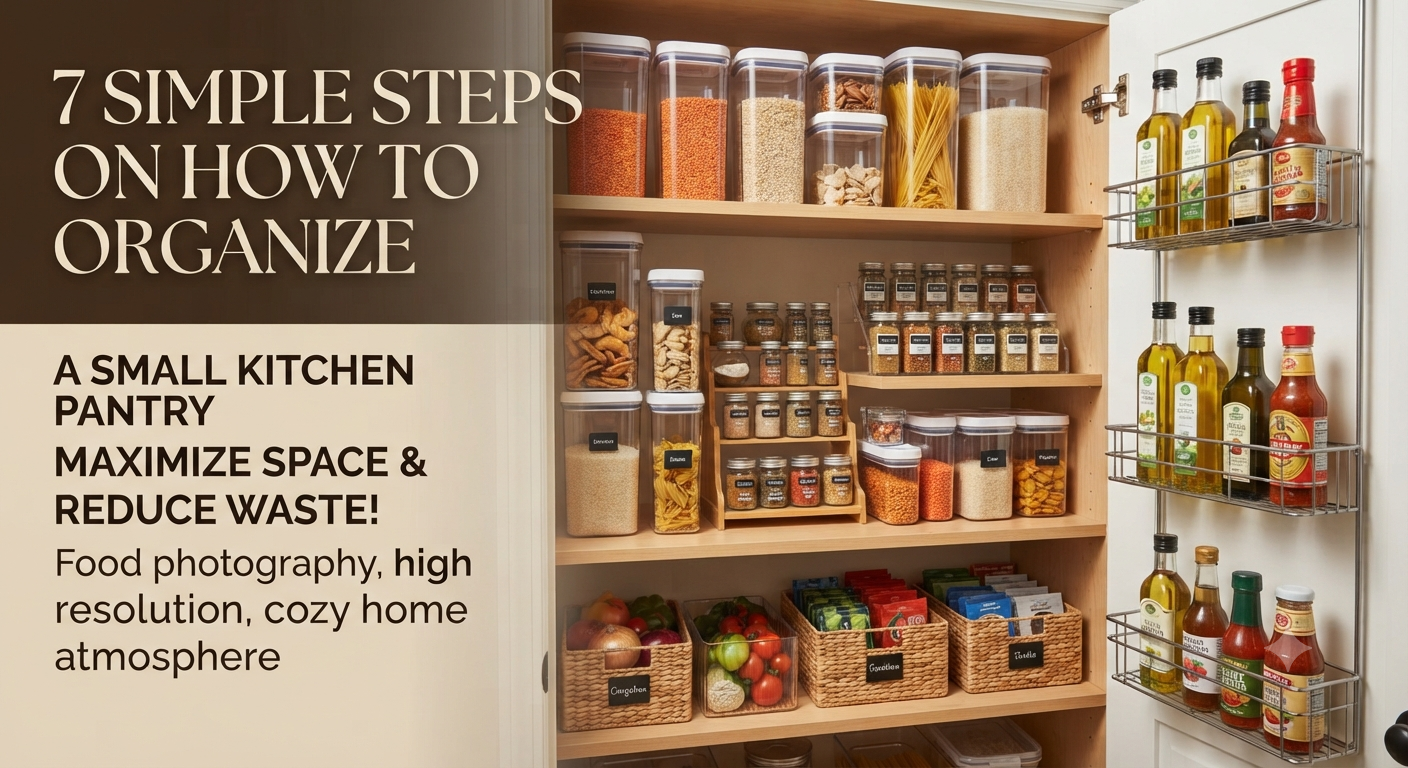
Tired of cluttered shelves? Learn how to organize a small kitchen pantry effectively with 7 simple steps to save time and reduce food waste.
Simple Steps on How to Organize a Small Kitchen Pantry
Why You Love It: A cluttered pantry leads to wasted groceries, expired ingredients, and daily frustration. You will love this article because it turns a cramped, messy space into an organized dream. It introduces smart storage hacks and clear categorization rules that make cooking feel effortless, turning your pantry into an inspiring culinary zone.
Table of Contents
The Challenge of Small Pantries
7 Steps to Complete Organization
Conclusion
7 Simple Steps on How to Organize a Small Kitchen Pantry
A cluttered and disorganized pantry leads to expired ingredients, forgotten groceries, and unnecessary daily stress. Learning how to organize a small kitchen pantry maximizes your vertical storage space and turns cooking into an effortless experience.
7 Steps to Complete Organization
Transform your cooking space efficiently by following these structured steps:
1. Complete Decluttering: Empty every single shelf completely and discard expired or stale items.
2. Categorize Your Goods: Group similar items together, such as baking supplies, grains, canned goods, and snacks.
3. Invest in Uniform Containers: Decant dry goods into clear, stackable rectangular containers to save precious shelf depth.
4. Utilize Door Space: Hang spice racks or wire baskets on the inside of your pantry door to free up interior shelving.
5. Implement Clear Labeling: Label every container with its contents and purchase date for quick identification.
6. Apply the First-In, First-Out Rule: Place older items toward the front and newly purchased groceries toward the back.
7. Maintain Weekly Resets: Spend five minutes every weekend wiping shelves and keeping items in their designated zones.
For more home organization ideas, explore Better Homes & Gardens.
Pros:
Maximizes vertical space and deep shelving using uniform stackable containers.
Reduces food waste by making inventory visible and easy to track.
Saves time during meal preparation by keeping ingredients neatly grouped.
Utilizes overlooked areas like cabinet doors for extra storage capacity.
Cons:
Completely decluttering and reorganizing shelves requires an investment of time and energy.
Purchasing matching storage bins and containers can add up in cost.
Maintaining the system requires regular weekly discipline to avoid clutter creeping back.
Conclusion
An organized pantry saves you money, reduces food waste, and makes preparing healthy meals a absolute joy every single day.
A cluttered, disorganized pantry is far more than just a minor aesthetic nuisance; it is a daily obstacle that actively drains your time, energy, and financial resources. When your shelves are jammed with forgotten bags, overlapping boxes, and expired ingredients, routine meal preparation quickly transforms from an enjoyable creative outlet into a source of daily frustration. You constantly find yourself rebuying items you already own simply because they are buried out of sight, leading to wasted groceries and unnecessary expenses.
You will fall completely in love with this article because it acts as an inspiring, step-by-step roadmap to turning even the most cramped, chaotic cupboard into a streamlined, highly functional culinary sanctuary. Instead of leaving you to guess how to handle tight corners or overflowing shelves, it introduces brilliant, space-saving storage hacks and crystal-clear categorization rules designed specifically to maximize every square inch of available room.
By implementing these strategic approaches, you will instantly eliminate kitchen chaos and streamline your cooking workflow. Finding ingredients becomes entirely effortless, allowing you to focus purely on the joy of cooking rather than hunting for hidden spices or buried cans. Ultimately, this guide helps you reclaim your kitchen, turning your pantry into an organized dream and an inspiring, efficient zone that sparks creativity every time you step up to cook.
Simple Steps on How to Organize a Small Kitchen Pantry
What is the first step in organizing a cramped pantry?
Completely emptying every single shelf to assess inventory and discard expired or stale items is essential.
How do uniform containers save space?
Decanting dry goods into stackable rectangular containers maximizes vertical shelf depth and eliminates bulky bags.
How can pantry doors be utilized for storage?
Hanging spice racks or lightweight wire baskets on the inside of doors frees up valuable interior shelving.
What is the FIFO rule in pantry management?
First-In, First-Out means placing older items toward the front and new groceries toward the back to reduce food waste.
How often should pantry maintenance be performed?
A quick five-minute weekly wipe-down keeps items in their designated zones and prevents clutter from returning.