
Introduction
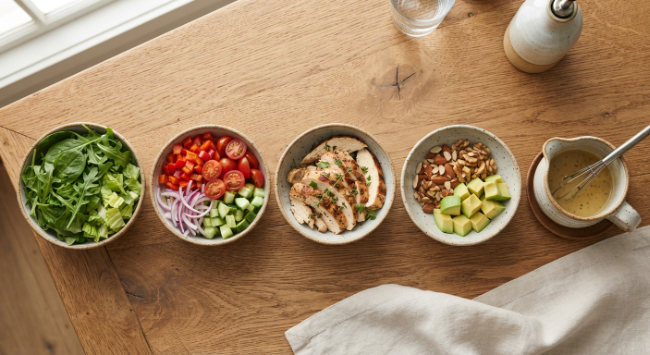
Most disappointing salads fail for the same reason: they are built around one ingredient instead of a structure. A pile of lettuce with a few cherry tomatoes on top is not a meal, and dumping in more toppings without a plan often just makes it heavier without making it more satisfying.
Learning how to build a balanced salad in five steps solves that problem by giving you a repeatable order to work through, so the result is filling, flavorful, and different every time depending on what is in your fridge.
Step One: Start With a Base of Leafy Greens
The base sets the tone for everything else. Darker greens like romaine, spinach, arugula, or baby kale offer more nutritional density than pale iceberg lettuce, which is mostly water.
According to Rutgers Cooperative Extension’s guide to building a better salad, darker leafy greens provide a wider range of vitamins and minerals than lighter varieties, and mixing two or three types of greens adds both nutritional variety and textural interest.
A reasonable starting point is about two loosely packed cups of greens per serving, which gives enough volume to build the rest of the salad on top of without it feeling sparse.
If you are not a fan of raw greens on their own, massaging kale briefly with a bit of olive oil and lemon juice softens its texture considerably.
Step Two: Add Volume With Colorful Vegetables
This is where a salad goes from base to actual meal. Aim for two or three vegetables in different colo
rs, since color variety in produce generally correlates with a wider range of nutrients. Bell peppers, cucumbers, shredded carrots, radishes, or roasted vegetables like sweet potato or zucchini all work well here.
Mixing raw and cooked vegetables in the same salad adds textural contrast that keeps the dish interesting bite to bite. A salad made entirely of raw crunchy vegetables can feel one note, while a mix of raw crunch and roasted softness feels more like a composed meal.
Step Three: Build In a Protein Source
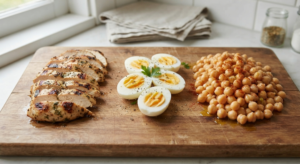
Protein is what turns a salad from a side dish into something that keeps you full for hours afterward. Grilled chicken, canned tuna or salmon, hard boiled eggs, chickpeas, black beans, or baked tofu all work, and there is no single correct choice; the right protein depends on what you have on hand and what flavor direction you are going for.
A useful general guideline is to make protein roughly a quarter of the total volume of the salad. Too little and the salad feels thin and unsatisfying an hour later; too much and it starts to taste more like a protein bowl with a few greens mixed in than a salad.
Step Four: Add Healthy Fats and Textural Contrast
Fat is not optional in a well built salad; it carries flavor and helps your body absorb fat soluble vitamins found in many vegetables.
Avocado, olive oil in the dressing, nuts, seeds, or a small amount of cheese all serve this role. Nuts and seeds do double duty here, adding both healthy fat and a crunchy texture that contrasts nicely with softer greens and vegetables.
Keep portions of these ingredients modest rather than generous, since they are calorie dense and easy to overdo. A small handful of nuts or a quarter of an avocado is usually enough to round out the salad without overwhelming it.
Step Five: Finish With a Dressing That Balances, Not Drowns
The dressing should enhance the salad, not soak it. A simple homemade dressing of three parts olive oil to one part acid, such as vinegar or lemon juice, plus a bit of mustard and seasoning, works for the vast majority of salad combinations. Dress the salad just before eating rather than in advance, since greens wilt quickly once dressing is added.
If you are meal prepping salads for the week, keep the dressing in a separate small container and add it right before eating. This one adjustment prevents the soggy, sad salad problem that turns a lot of people off meal prepped salads entirely.
Practical Combinations Using This Framework
A Mediterranean style version might combine spinach and arugula, cucumber and roasted red pepper, chickpeas, feta and olives, finished with an olive oil and lemon dressing. Also read 10 Essential Low Carb Pantry Staples List for Healthy Cooking .
A Southwest style version could use romaine, corn and black beans, grilled chicken, avocado, and a lime based dressing. Neither of these requires a specific recipe; they are simply the five step framework applied with different ingredients pulled from what is available.
Real Life Example: How University Extension Programs Teach Salad Building
The five step approach used in this article closely mirrors guidance published by Rutgers Cooperative Extension, which recommends selecting ingredients from several food groups, vegetables, fruits, protein, grains, and dairy, while keeping added ingredients like high fat, high sodium dressings in check.
Their guidance specifically highlights that the color and variety of vegetables used matters, since darker greens and a range of colorful vegetables provide more nutritional benefit than a single pale base ingredient.
It is a useful confirmation that the structure taught here, greens, vegetables, protein, fat, and a controlled dressing, is not an arbitrary framework but one that reflects established nutrition education guidance rather than a trend.
Common Mistakes When Building a Salad
The most common issue is skipping protein entirely, which leaves the salad feeling more like a snack than a meal. Another is drowning the salad in dressing before eating, which masks the other flavors and adds unnecessary calories fast.
A third is relying on the same two or three ingredients every time, which makes salads feel repetitive and easy to give up on. Rotating through this five step structure with different specific ingredients solves all three problems at once.
Conclusion
Learning how to build a balanced salad in five steps turns a often uninspired side dish into a genuinely satisfying meal.
Start with a generous base of leafy greens, add volume with a couple of colorful vegetables, build in a real protein source, round it out with healthy fats and some texture, and finish with a dressing that complements rather than overwhelms everything underneath it.
Once this structure feels automatic, you stop needing a recipe at all.
Frequently Asked Questions
What are the 5 steps to building a balanced salad?
Start with a base of leafy greens, add colorful vegetables for volume, include a protein source, add healthy fats for flavor and texture, and finish with a light, balanced dressing.
How much protein should be in a balanced salad?
A reasonable guideline is around a quarter of the total volume of the salad, enough to make the meal satisfying without overwhelming the other components.
Why does salad dressing matter so much for a balanced salad?
Dressing affects both flavor and how quickly the greens wilt. A simple oil and acid based dressing added just before eating keeps a salad tasting fresh and balances flavor without adding excess sodium or sugar.
Can a salad be a full meal on its own?
Yes, when it includes a genuine protein source and healthy fat alongside the greens and vegetables, a salad built with this five step structure can function as a complete, satisfying meal.
What vegetables work best for adding to a balanced salad?
A mix of two or three different colored vegetables, such as bell peppers, cucumbers, carrots, or roasted sweet potato, adds both nutritional variety and textural interest.
Is it better to use raw or roasted vegetables in a salad?
Both work well, and combining raw and roasted vegetables in the same salad often creates a more interesting texture than relying on only one preparation style.
How do I keep meal prepped salads from getting soggy?
Store the dressing separately from the greens and other ingredients, and combine everything just before eating rather than dressing the salad in advance.