
Half a bag of spinach wilting in the crisper. A block of cheese you only needed two ounces of. A recipe that made four servings when you only needed one.
If you cook for yourself, this is a familiar story, and it is exactly why meal planning for one person on a budget requires a different approach than planning for a family. The math is different, the waste risk is higher, and most recipes are not written with you in mind.
Why Cooking For One Is Its Own Challenge
Grocery stores and recipe sites are built around family sized portions. When you are shopping and cooking for just yourself, that mismatch quietly drains your budget.
You either buy more than you need and throw part of it away, or you avoid fresh ingredients altogether and default to expensive convenience food. Neither is sustainable long term.
Buy Smaller Quantities On Purpose
Look for smaller packaging where it exists: single serve yogurt, smaller cuts of meat, or produce sold individually rather than in bags.
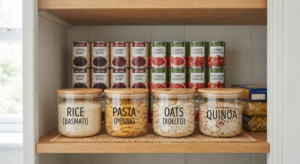
When bulk buying is genuinely cheaper, only choose it for items you know you can freeze or that keep well, such as rice, pasta, or canned goods.
Choose Versatile Ingredients
Build your grocery list around ingredients that work across several meals. A rotisserie chicken can become a dinner, a sandwich filling, and a soup base.
A bag of frozen mixed vegetables can round out three or four different meals without spoiling before you use it. Also read 10 Essential Low Carb Pantry Staples List for Healthy Cooking.
Lean On Freezer Friendly Foods
Meat, bread, soups, and cooked grains generally freeze well. Portion them into single servings before freezing so you are not thawing more than you need.
This single habit does more to control both waste and cost than almost anything else on this list.
Batch Cook, Then Portion
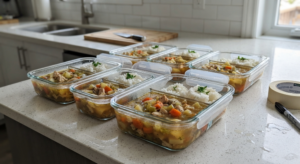
Cooking one large batch of a base recipe, like a pot of chili or a tray of roasted vegetables, and dividing it into individual containers gives you several ready meals without cooking every single night.
This is different from meal prepping an entire week at once. It is simply cooking smart when you do cook.
Affordable Protein Choices
Eggs, canned beans, canned tuna, lentils, and chicken thighs tend to offer strong value per serving compared to premium cuts of meat.
Rotating a few of these across your week keeps protein intake reasonable without straining your grocery budget.
Budget Friendly Vegetables
Frozen vegetables are often just as nutritious as fresh and last far longer, which matters a great deal when you are the only one eating them.
In season fresh produce is usually the better value when you do buy fresh, since it tends to be cheaper and last longer than out of season options.
Affordable Pantry Staples
Rice, pasta, canned tomatoes, canned beans, oats, and broth form the backbone of a low waste, low cost single person kitchen.
These items do not spoil quickly, which removes a lot of the pressure that fresh ingredients create when you are cooking alone.
Avoid Single Use Ingredient Purchases
Before adding an ingredient to your list, ask whether it will be used in more than one meal that week. If a recipe calls for something you will only use once, look for a substitute you already own or skip that recipe for now.
Build A Simple Meal Rotation
Rather than planning something completely new every night, build three or four go to meals you enjoy and can make with small variations.
This keeps grocery lists shorter and reduces the mental effort of deciding what to eat each night.
Sample Weekly Meal Plan for One Person on a Budget
Monday: baked chicken thighs with roasted frozen vegetables and rice. Tuesday: lentil soup made in a larger batch, with half portioned for the freezer.
Wednesday: leftover lentil soup with bread. Thursday: a vegetable and egg scramble using whatever produce needs to be used up. Friday: pasta with canned tomatoes, beans, and any remaining vegetables.
Saturday: a simple sandwich using leftover chicken. Sunday: rice bowl with beans, a fried egg, and frozen vegetables.
This plan intentionally reuses a small set of ingredients across multiple meals. Prices for these staples vary by region and by season, so treat this as a structural example rather than an exact shopping list.
Real World Example: A Practical Approach to Cooking for One
Iowa State University Extension and Outreach, through its Spend Smart Eat Smart program, offers guidance specifically written for people who cook for themselves on a limited budget.
Nutrition specialist Christine Hradek describes building planned overs into her weekly routine, cooking a larger batch when she is already at the cutting board and freezing the extra portions in single serve containers so a couple of nights each week rely on meals made in a previous week.
This is a useful illustration of how batch cooking and freezing work together in a real single person routine, rather than staying purely theoretical.
Portion Management Without Waste
When you cook a full recipe, immediately portion the extra into containers rather than leaving it in one large dish. Food you can grab and reheat gets eaten. Food buried in a large container in the back of the fridge often does not.
Common Mistakes to Avoid
Buying a full recipe’s worth of ingredients when the recipe was never adapted for one person. Letting fresh produce sit unused because there was no plan for it.
Cooking a new, unfamiliar recipe every night, which increases the odds of waste and overspending.
Conclusion
Meal planning for one person on a budget comes down to matching your buying habits to your actual eating habits.
Choose versatile ingredients, batch cook with intention, freeze what you will not eat immediately, and build a rotation you can repeat without getting bored.
Over time, this becomes far less about restriction and much more about a system that quietly works in the background of your week.
FAQs
How do I meal plan for one person without wasting food?
Focus on versatile ingredients that work across several meals, portion leftovers immediately, and freeze extras in single servings rather than letting them sit unused.
Is it more expensive to cook for one person?
It can be if you buy family sized packaging and let ingredients spoil unused. Choosing smaller quantities and reusable staples closes much of that gap.
What are the best affordable proteins for cooking alone?
Eggs, canned beans, lentils, canned tuna, and chicken thighs generally offer strong value per serving for a single person kitchen.
Should I buy in bulk if I only cook for myself?
Only for items that store well or freeze easily, such as rice, pasta, and canned goods. Bulk fresh produce often leads to waste for a single person household.
How many meals should I plan for one person per week?
Three or four core meals that you can repeat with small variations is usually enough, supplemented by planned leftovers.
What is the easiest way to avoid single use ingredients?
Before buying anything, check whether it appears in more than one planned meal that week. If not, look for a substitute you already have.
Do frozen vegetables work for single person meal planning?
Yes. Frozen vegetables last much longer than fresh produce and reduce the risk of unused ingredients spoiling before you get to them.